In the past few years, I’ve become mildly obsessed with birds—identifying them, recognizing their calls, learning more about their abilities and behaviors. They are such beautiful and intelligent creatures!
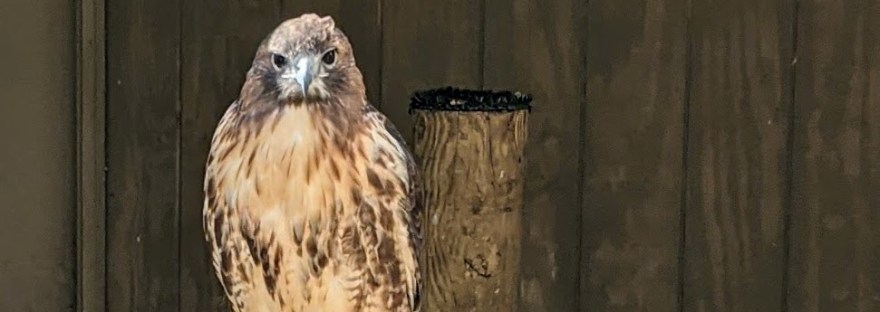
I get to see plenty of songbirds up close at the feeders and birdbath outside my house, but I rarely catch sight of large raptors, and certainly not close enough to really observe their features. So I was excited to visit the Ohio Bird Sanctuary in Mansfield, Ohio, about an hour north of Columbus. It’s a nonprofit organization dedicated to rehabilitating injured or orphaned birds. Though the primary goal is to release birds back into the wild, sometimes that is not possible. There are about 60 birds—including a number of raptors—that live as permanent residents of the Sanctuary, housed in enclosures on the peaceful 90-acre preserve.
On a crisp, sunny morning, I traveled the rural roads of Ohio to the Sanctuary. I stopped in the visitor center to pay the admission fee ($3 for adults) and chat with the volunteer greeter. She gave me a map of the grounds and a brief orientation before I went outside to meet the birds.
The Birds
You might expect a collection of 60+ birds to be cacophonous, but in fact most of the residents were quiet and watchful. Only the crows, true to form, were rowdy and raucous—much like a flock of middle schoolers in the cafeteria after a year-long pandemic hiatus.
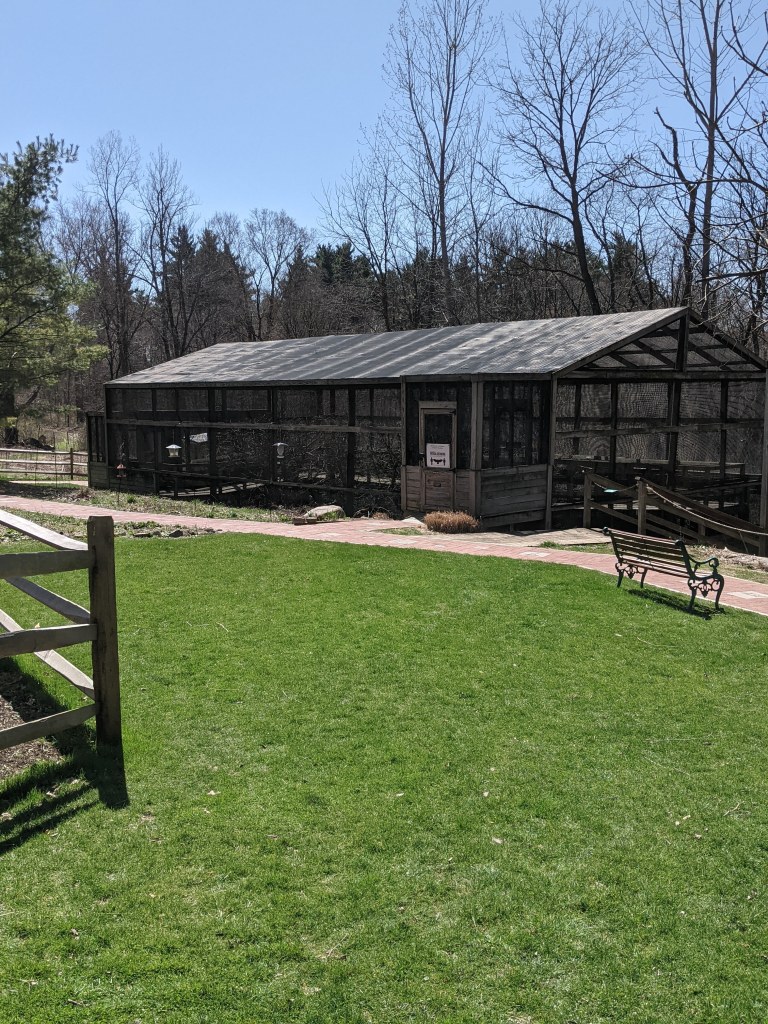
Every owl, falcon, hawk, osprey, vulture, crow, and bald eagle who calls the Sanctuary home has a name and a unique story. Each spacious enclosure houses only one or two birds, so they have plenty of room to perch, walk, and even fly about. Several raptors were hit by cars, sustaining injuries to their wings. Some (like Saint Alice) suffer from long-term effects of illnesses like West Nile Virus. Others were found orphaned or abandoned, unable to care for themselves in the wild.

Seeing the birds up close, I could really appreciate their uniqueness, beauty, and size.


In addition to the individual raptor enclosures, there is a larger aviary where various songbirds coexist. Visitors can walk through the songbird house and even purchase a tiny cup of seed to feed the cardinals, bluejays, finches, and doves. If you’re lucky, one of the birds might even land on you.
However, one of the biggest surprises of the day was an encounter with this guy.
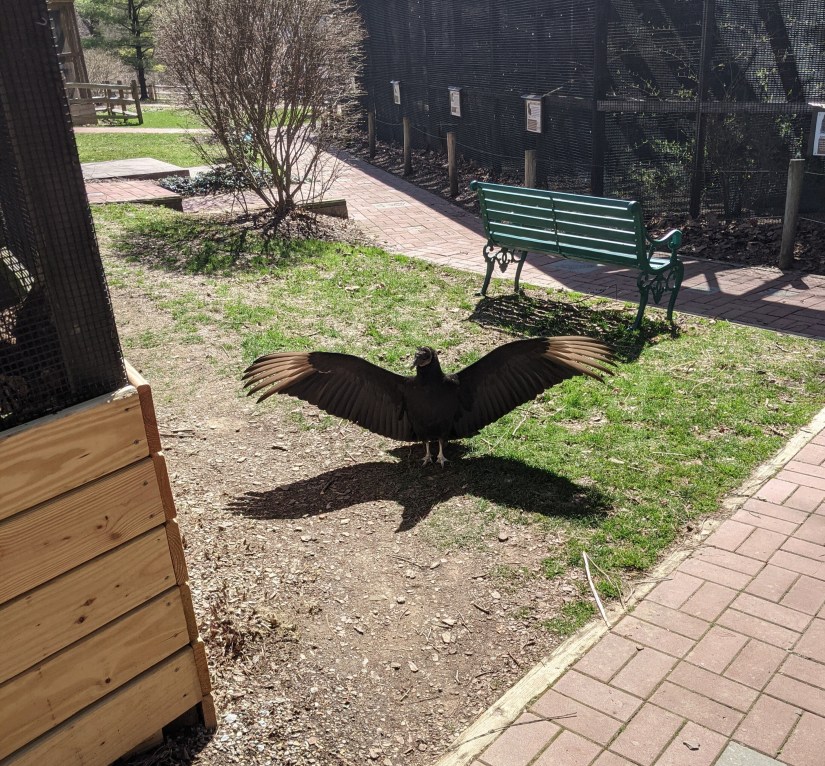
My first thought was, How did this bird get out of its cage!? But it was a wild vulture, airing out his wings for a moment as he visited the Sanctuary. Or more accurately, as he tormented the crows. They had been the noisiest birds all day, but they REALLY went berserk at the uninvited guest. The vulture lazily flapped up to the top of the crow enclosure, poking and prodding at the wires while the crows squawked in outrage.
The Trails and Treehouse
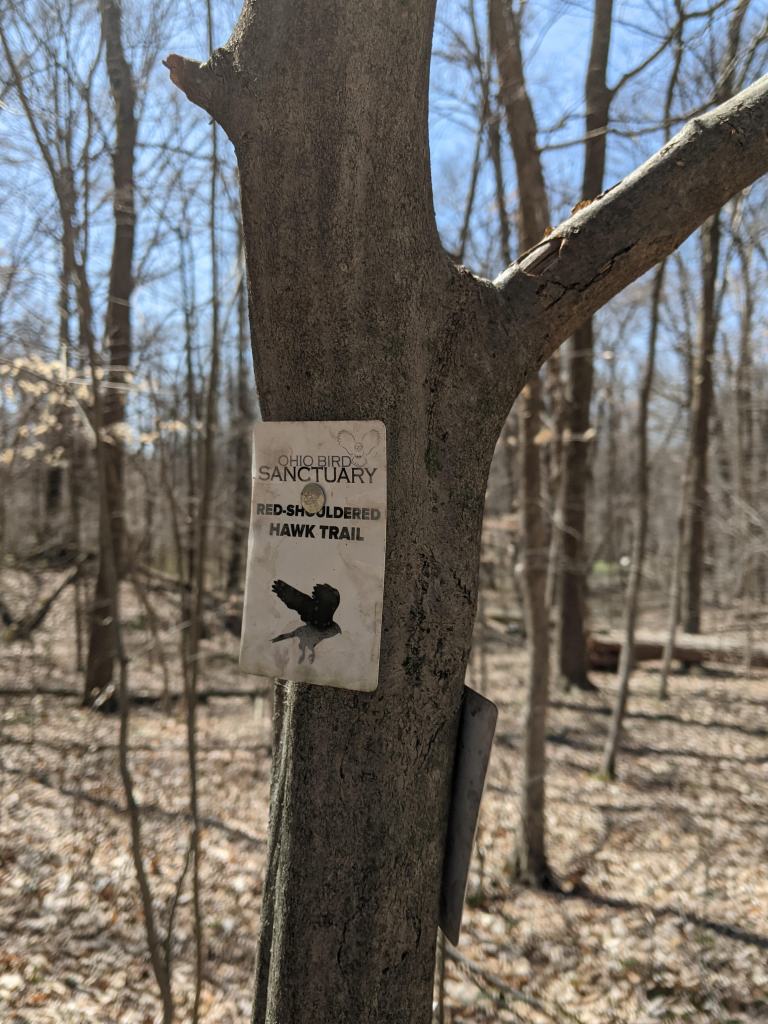
In addition to the aviary, the Sanctuary features several miles of beautiful trails, including one along the Clear Fork River. The birds were the main attraction, but I couldn’t resist a walk in the woods. On the day I visited I basically had the trails to myself. There are cozy picnic areas tucked throughout the trails, as well as activities for children. It would be hard to get lost since the trails are not very long, but even so they are marked with charming and helpful “bird blazes.”
One of the newest projects at the Sanctuary is a treehouse classroom. Volunteers and experts from Nelson Treehouse finished the 100-foot bridge connecting to an open-air treehouse in summer 2021.


Programs and Support
The Ohio Bird Sanctuary offers a number of programs for visitors of all ages. Every Saturday they hold an “avian encounter” during which visitors can meet one of the bird ambassadors up close. Other on-site program options include workshops, camps, and tours. You can even host birthday parties there. For something more in-depth and personal, schools and organizations can arrange outreach visits from the birds and their caretakers. These days, of course, there are also “virtual” programs available. So many options!
If you are as impressed with this place as I am and want to support its work, you can do so in a variety of ways.
- Become a member
- Adopt a bird
- Make a donation (they have a wish list of items on Amazon; toss one in your cart)
- Purchase a memorial paver or bench
- Volunteer your time!
Want to Learn More?
I’ve learned a lot from the resources listed here, and I think any fledgling or experienced birder would enjoy them as well:
- What It’s Like to Be a Bird by David Allen Sibley. He is not only a master ornithologist, but also a talented artist and writer. This should be a coffee table book in every household.
- The Genius of Birds by Jennifer Ackerman. This book details what a compliment—rather than an insult—it should be to call someone a “bird brain”! She recounts stories and research studies that highlight birds’ amazing abilities, from memory skills to musical talents to social prowess. It’s a fascinating read.
- The Cornell Lab of Ornithology website is an incredible resource for learning more about all things bird-related. I’ve had a lot of fun listening to their collection of bird call recordings and trying to match them up with the sounds from my backyard feeders and metro-park rambles.

 Don't Fleece the Bees