
If you are not familiar with the term, “ruck” is a thing, and it’s also an action. You ruck with your ruck. Translation: You carry weight in your backpack. This simple activity, hiking while carrying a weighted pack, is not a new concept, though these days it is gaining traction with people from all walks of life.
I was familiar with rucking from my husband. He would sometimes load up his backpack with a weight plate (or two) before hitting the hiking trail. Years ago when he first started rucking, I was like, “Seriously? That sounds horrible. Why ruin a perfectly nice walk in the woods?”
And that was the sum of my thoughts about rucking.
Until recently, when I read The Comfort Crisis by Michael Easter. Rucking is hardly the central focus of his book, which interweaves the story of his month-long caribou-hunting expedition in the Arctic with research and commentary on how the comforts of our modern lifestyle can be detrimental to our health, happiness, and longevity. But he does spend some time discussing rucking (super relevant to the part of the story when he must carry 100 pounds of caribou meat five miles back to camp), and it was eye-opening.
Rucking’s genesis is in the military, where soldiers have always had to carry heavy loads pretty much everywhere they go. As far back as Roman times, soldiers engaged in weighted marches. Today, soldiers’ “rucksacks” generally weigh from 50 to 100 pounds. Not surprisingly, carrying all that extra weight exerts a substantial cardiovascular and strength load on your body and builds mental fortitude as well.
Like many things that started in the military and eventually trickled down into civilian use—like duct tape and the internet—rucking entered the mainstream in the 2000s. I was starting to understand its growing popularity. The benefits of rucking are huge:
- It contributes to functional strength—we carry things all the time in regular life. And by improving core strength, balance, and body awareness, rucking makes us less injury-prone.
- It provides time in nature. Always a good thing!
- It can be a social activity. Because it is easily scalable, people of varying abilities can still ruck together.
- It is so simple. You need very minimal gear to get started, and you can ruck literally anywhere.
- It exerts less impact on your joints than running, yet burns significantly more calories than walking. So it splits the difference between the benefits and risks of the two activities. Keep in mind that the heavier your rucksack, the more stress on your joints. It’s important to build up slowly, use good form, and wear appropriate footwear.
So it got me thinking. I like to walk. I like to strength train. I like to do cardio. Rucking checks all three of those boxes. A win-win-win! To his credit, when I shared my newfound excitement about rucking with my husband, he didn’t roll his eyes. Instead he offered to let me borrow his backpack and showed me how to load the weight properly. (I know—he’s the best.)
I did a little more reading about “Rucking for Beginners” to figure out how much weight I should carry. Starting out, they recommend about 10-15% of your body weight. I weigh about 140, so 20 pounds seemed like a good place for me to start.
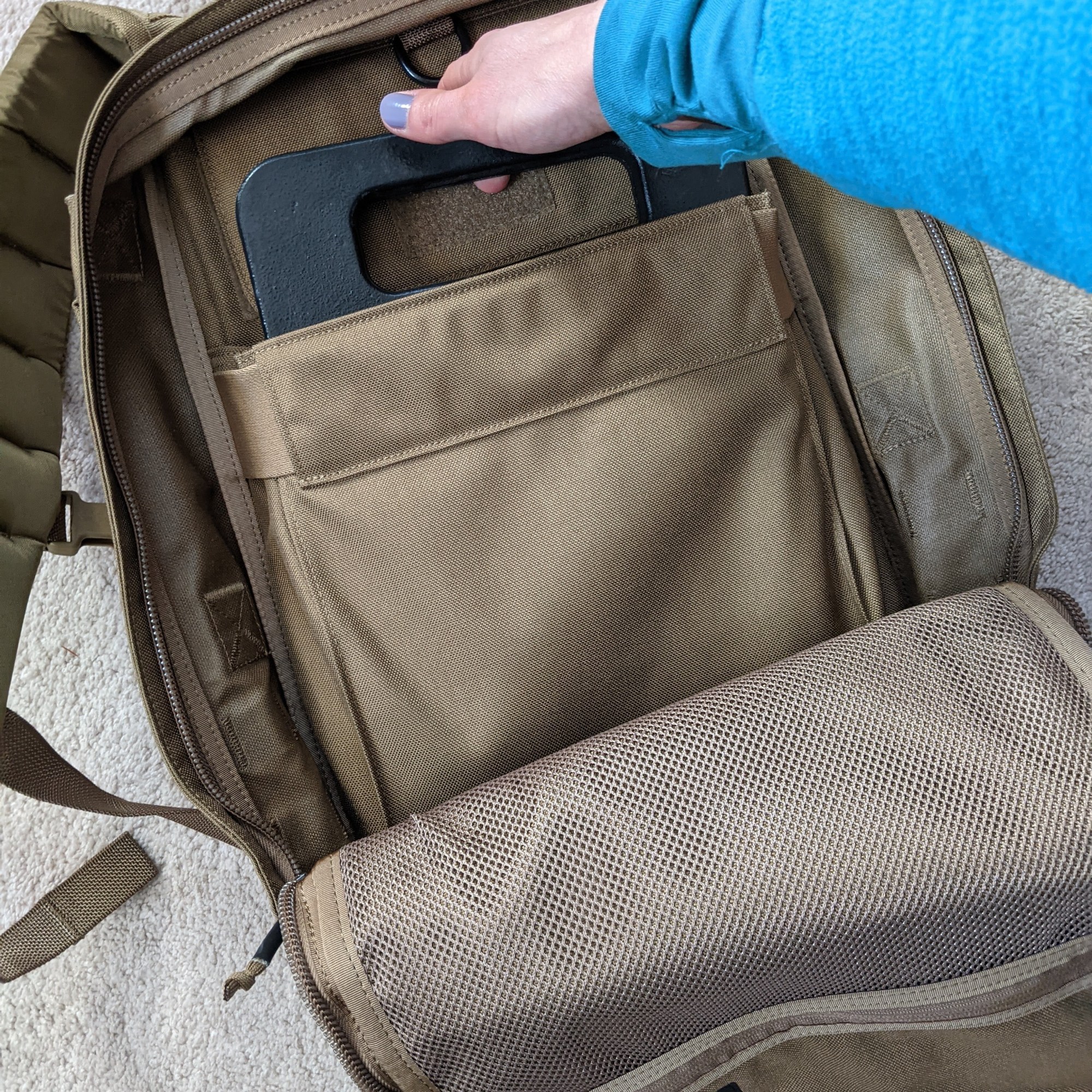
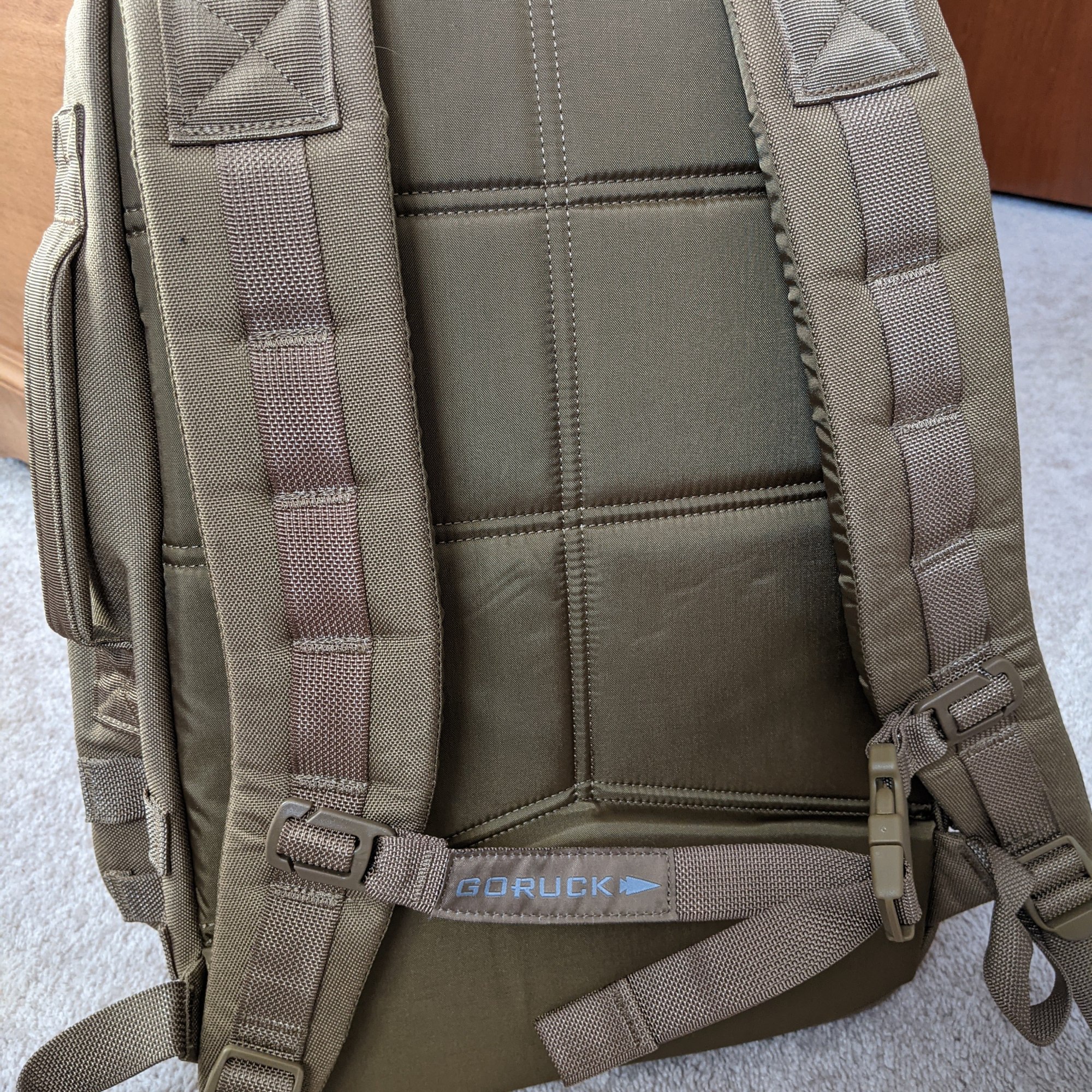
The right backpack is crucial too. The Jansport I use for school would not cut it. For a much lighter weight it might work, but 20 pounds would strain its limits. There are specially designed backpacks for rucking, with reinforced stitching and thick, padded straps that don’t shred your shoulders and that keep the weight up high and tight against your back. My husband and I swaddled two 10-lb weight plates in an old towel, cinched the straps to secure the backpack snugly onto my back, and off I went.
I didn’t want to overdo it my first time out, so I walked on a flat, paved trail and only for about two miles.
The Verdict
Twenty pounds didn’t really sound like a lot of weight to me, but it was a good amount for my beginning ruck. From the first step, it did not feel like the typical stroll on the trail. Usually when I walk, it’s easy to lose track of time. I enjoy it so much, I often feel like I could keep walking forever.
This was not like that. It felt long. Half a mile in, I was like, That was only half a mile?? But everything is hard when you first try it, so I embraced the discomfort and just observed what was happening throughout my body.
My shoulders and upper chest worked to counter the weight pulling down on them.
My upper back grew tight and fatigued.
My hips and core engaged, adjusting to the shift in my center of gravity.
I had to consciously pick my feet up to keep them from scuffing against the ground.
I felt myself getting slightly winded, though my pace—while brisk—would have been no big deal on a regular hike.
The next day, I wasn’t especially sore anywhere, though I noticed a little tightness across my shoulders and upper back.
I did a few more rucks over the next couple of weeks, adding distance incrementally and focusing on maintaining good rucking form. You want to keep your head high and body upright—don’t lean forward. Keep shoulders relaxed away from your ears and glutes engaged. I suppose you could just stroll along at whatever pace you want, but setting a more intentional pace (my goal was 15 minutes per mile) will increase the cardio benefits.
One of the best things about rucking is that you can adjust the challenge level in so many ways.
Add more (or less) weight.
Add more (or less) distance.
Add more (or less) speed.
Add some hills or stairs.
Mix in some strength intervals with pushups, squats, pullups, etc.
So the early votes are in, and I must say, rucking lived up to the hype. A little strength, a little cardio, and some unexpected mental engagement too. I’ll definitely be incorporating rucking into my workout circuit. I would not use the word “fun” to describe rucking, but I wouldn’t necessarily call my weight lifting or HIIT workouts fun either. Challenging, yes. Invigorating, yes. And satisfying for sure. It feels fantastic to work hard and accomplish a goal. I love it, even if it’s not always fun.
Actually, though, come to think of it, there is something fun about rucking. It happens when you unshoulder your rucksack at the end of a hike. It’s magical. In that moment of sudden weightlessness, it feels like you could fly!
Postscript:
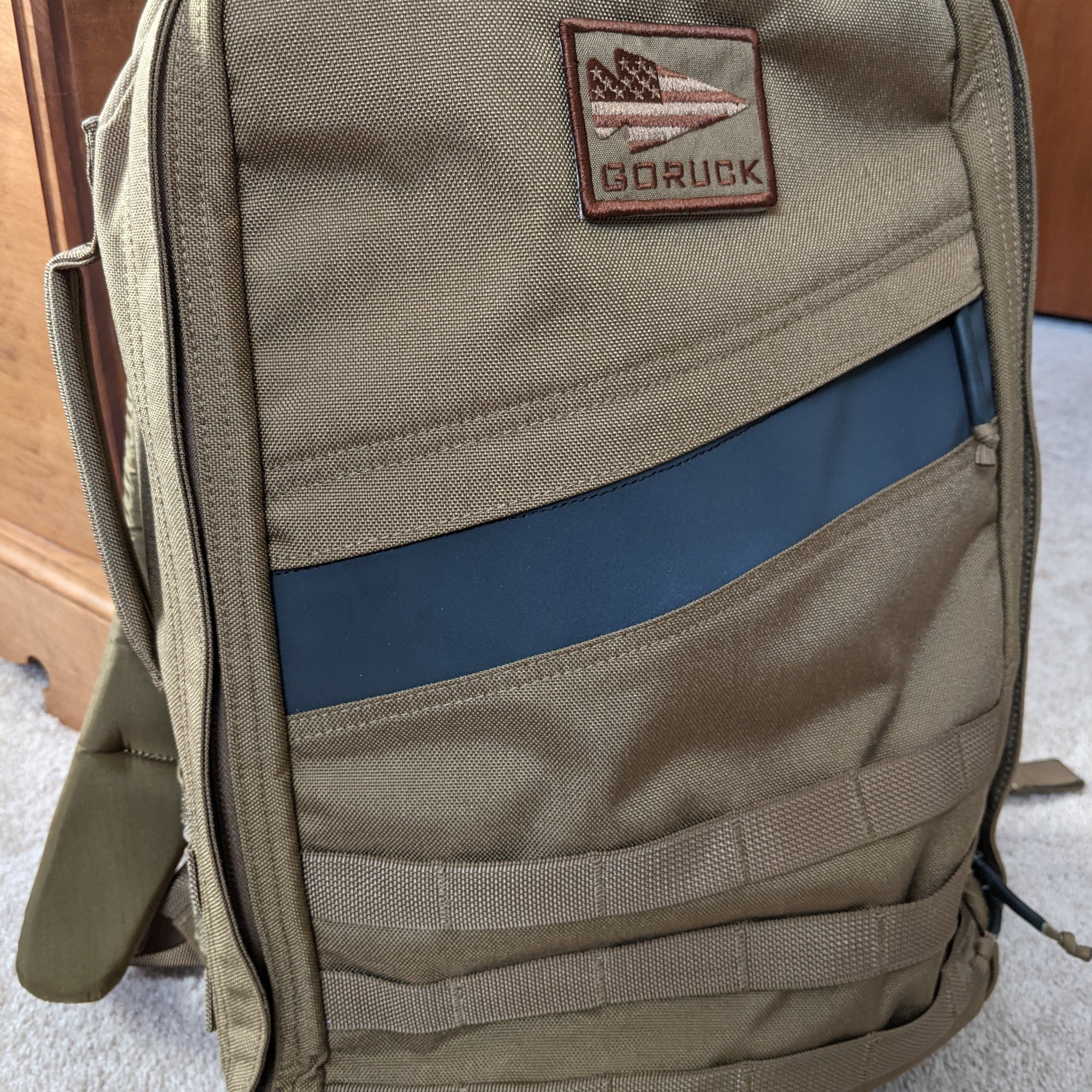
I took to rucking so enthusiastically that my husband surprised me with my very own rucksack and weight plate for my birthday! It’s one of the super nice bags from GORUCK (more info below), and wow is it comfortable. I love it.

For further exploration:
If you are interested in learning more about rucking, there is no shortage of information out there once you start digging a little.
GORUCK is a company co-founded by former Green Beret Jason McCarthy and his wife, Emily (a former CIA operative). Michael Easter includes an interview with Jason in The Comfort Crisis. While the company does sell rucking gear, they are most passionate about serving others and building a strong community. There are GORUCK events you can sign up for, local GORUCK clubs to join, or if that’s not enough, you can become a member of the GORUCK Tribe for monthly challenges and a community of support.
I found an interesting episode on “The Art of Manliness” podcast. It is not a podcast I subscribe to, but this particular episode, an interview with Josh Bryant, certainly doesn’t apply just to manly men! Josh is the author of Rucking Gains, and in this 30-minute interview, he talks about the many benefits of rucking and shares advice on how to get started.
I also enjoy Michael Easter’s “2 Percent” newsletter. In a recent post he described a 100 pound, one mile ruck challenge (which, following his advice for a person my size, I scaled to a 70 pound, one mile ruck). Holy shit was that hard. But I loved it.

 Don't Fleece the Bees