Create

Milkweed + Monarchs = Magic

You are about to read a very special blog post, guest-written by my sister Laura! I have mentioned her in multiple previous posts, since she 1) is a very important person in my life, and 2) is awesome.

Last summer, I vicariously experienced one of nature’s miracles happening in her southern California backyard—the metamorphosis of the monarch butterfly. The beauty and tenacity of these creatures captivated me, and I wished for their story to be shared with all. I hope you enjoy it as much as I did.


One of my coworkers recently shared an article about how the monarch butterfly has been classified as endangered by the International Union for Conservation of Nature. I work at an environmental nonprofit, so getting links to these types of articles from coworkers is pretty common, but this one really grabbed my attention because I had just spent the month of June having an engrossing, up-close experience with monarchs in my own backyard. 

It all started when I bought a milkweed plant at the nursery in the fall of 2021 on a whim. I’ve heard over and over again that if you want to have butterflies in your yard you should plant milkweed, so it seemed like it was worth a shot. The plant I bought is a narrow-leaf milkweed and is native to Southern California, which is where I live. I can’t say it’s an especially beautiful plant, and my expectations about actually attracting butterflies were really low. Little did I know it would soon become one of my most prized plants and that I would be planning to add more milkweed to my yard this fall.
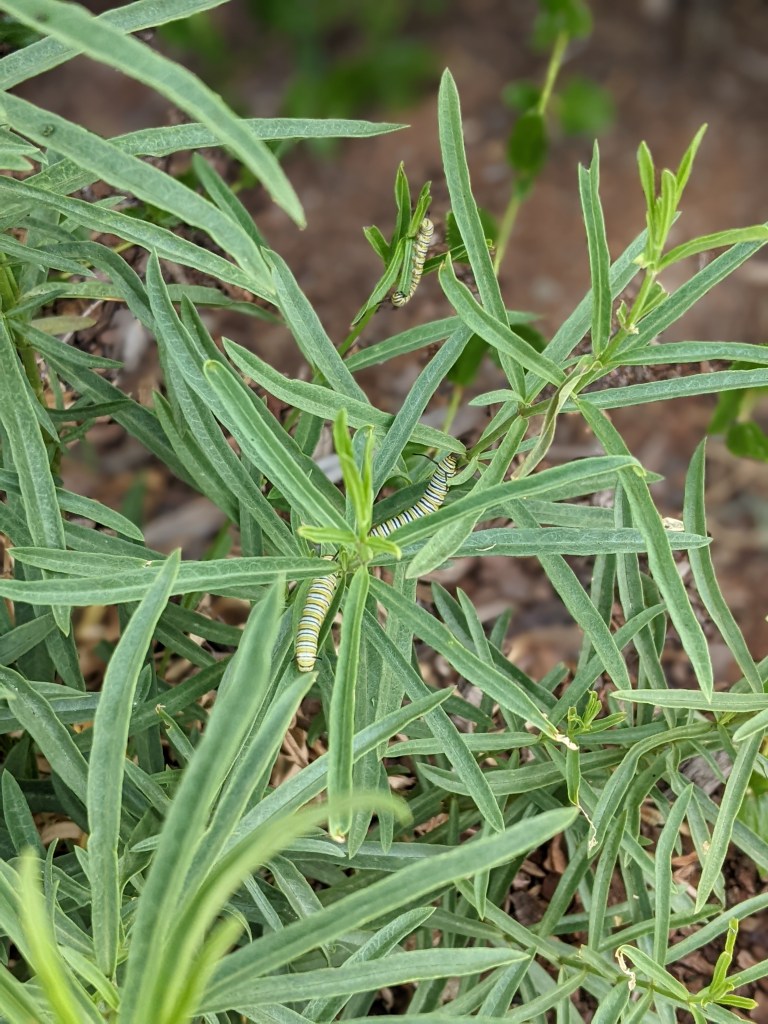
A few caterpillars enjoying the milkweed


There are already many well-written and informative articles out there about the life-cycle of monarch butterflies so I won’t attempt to create yet another one. I feel like I was already pretty well aware of the general process from school, work, the media, etc., but there were a handful of things in my experience with the monarchs that I was either not prepared for or that really surprised me.  

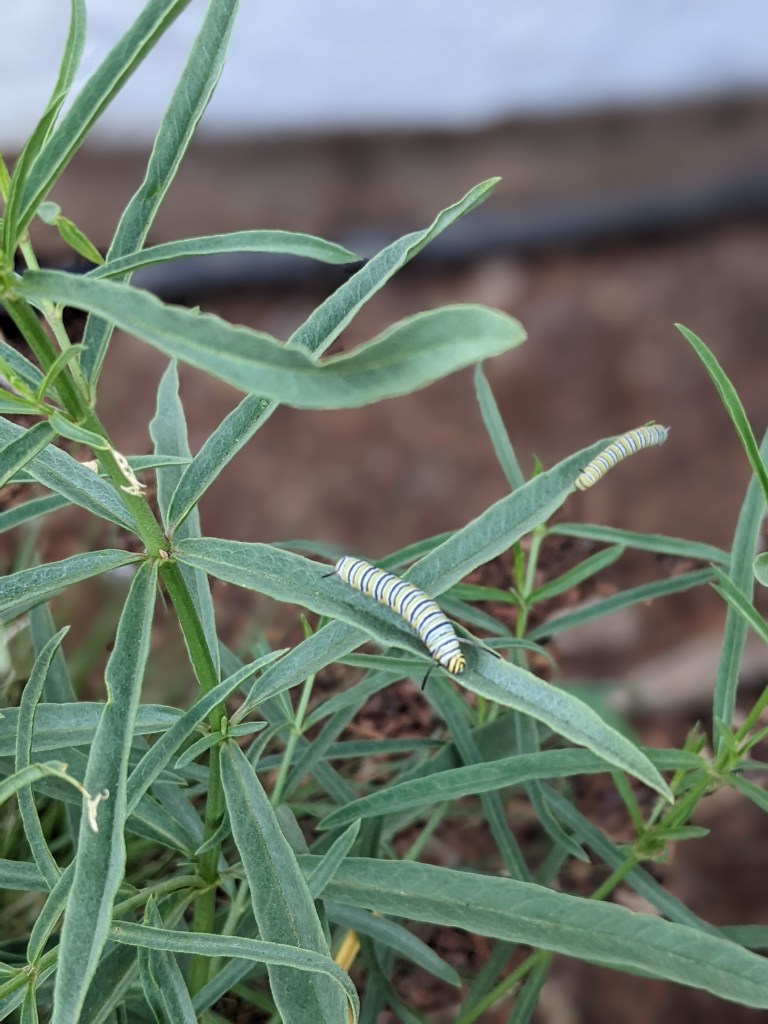
Eric Carle was mostly correct. I was shocked by how quickly the little monarch caterpillars grew and by how much they ate. Of course, I couldn’t help thinking of The Very Hungry Caterpillar. It seemed so cliche to me, but that’s what I thought about every day as I went out to visit my little caterpillars happily munching away. They eat so much and they grow really fast! I guess maybe Eric Carle actually did a little research for his book…
The process of actually making a chrysalis is fast. Those little caterpillars don’t mess around. I specifically remember going out in my backyard one afternoon to scrub some floor mats from my car. My caterpillars were at the point where they were starting to crawl away from the milkweed to find a new place to hang out and make their chrysalises. I noticed one particular caterpillar who had just started his “j-hang” on my ceanothus plant as I went to turn on the garden hose. Half an hour later when I went to turn off the hose I saw a shiny green chrysalis. I wish I had sat there and watched the caterpillar a little longer!

From “j-hang” to chrysalis in 30 minutes!

Emerging from the chrysalis is fast too. I also should have stayed home from work on the morning that that same caterpillar was getting ready to emerge from his chrysalis. I noticed during my morning inspection that the chrysalis had turned clear and you could see the butterfly wings inside, so I made plans with my husband to set up our GoPro on a time-lapse setting later that day in the hopes of capturing the event. As insurance, I also tasked my daughter with going outside and checking the chrysalis every hour. That turned out to be a smart move because I wasn’t at work for more than an hour before my daughter started texting me to say we had a new butterfly. Thankfully she got some photos and a video too. Again, those caterpillars don’t mess around. When it’s time to transform, they do it quickly.
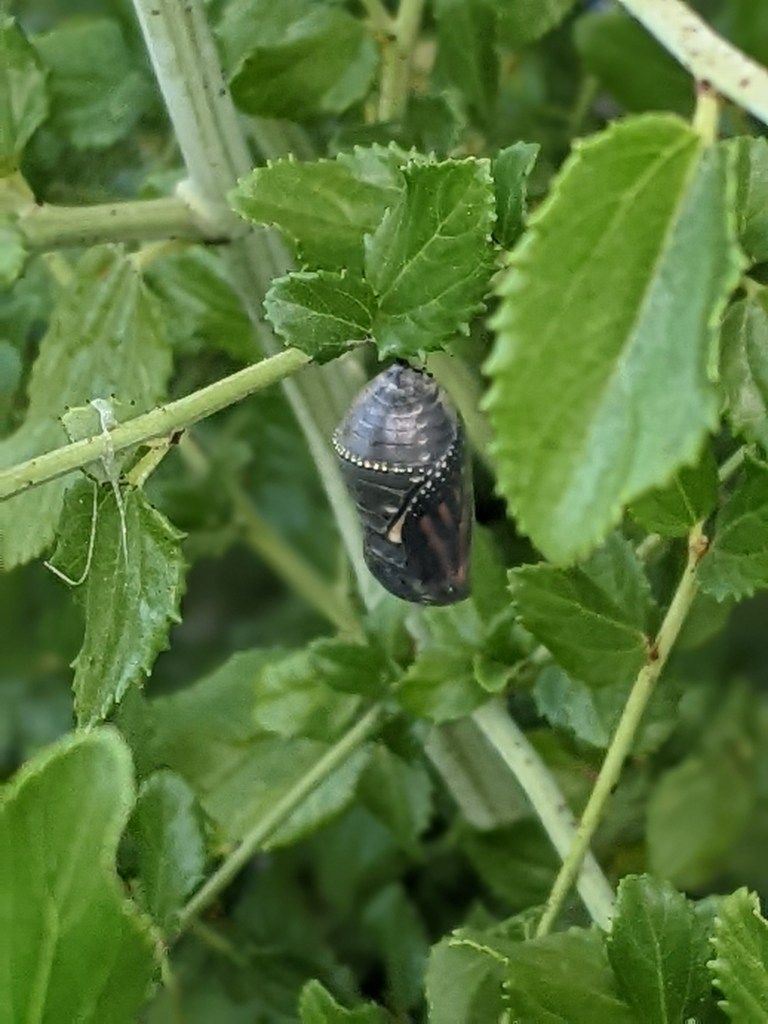
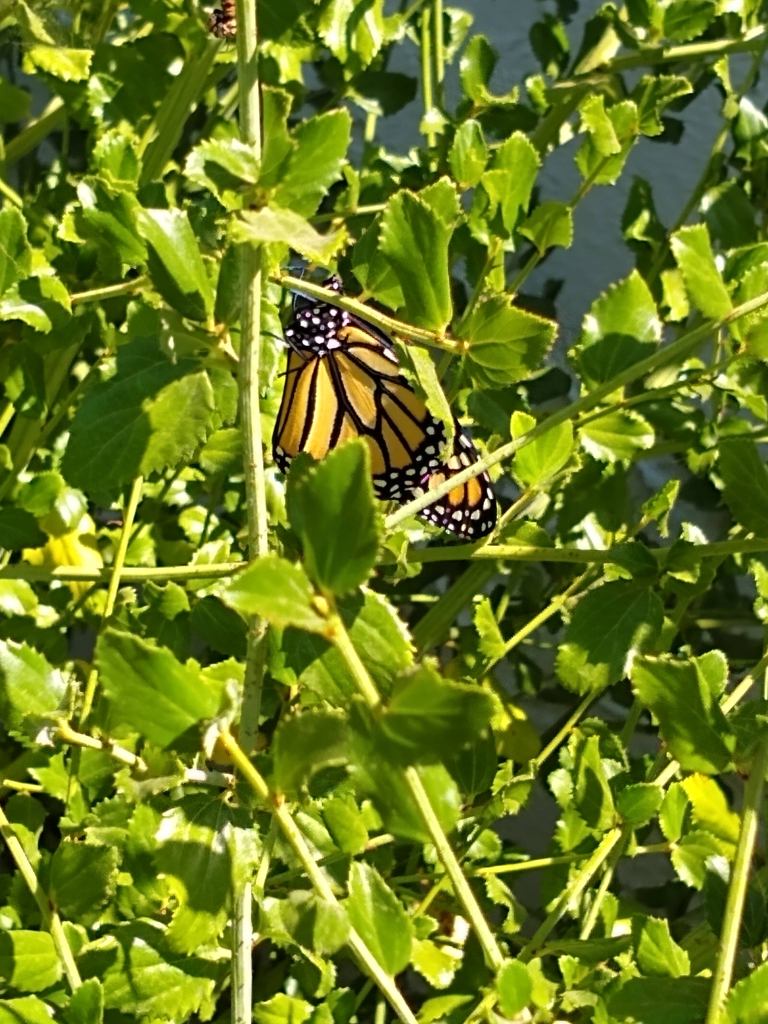
This photo was taken just a few hours before the butterfly emerged.
And here it is. Watch the video of its FIRST FLIGHT!

Nature is cruel. Hearing other people say this is one thing, but it’s another to watch it play out before your eyes in your own backyard. Have you ever heard of the tachinid fly? I hadn’t either but I noticed that some of the caterpillars who had crawled away to make their chrysalises seemed to be dead. I also noticed a strange white thread hanging off of some of them. I thought at first that maybe a spider had gotten them, but a little research led me to the real culprit. The tachinid fly lays its eggs on the monarch caterpillars as they are eating and growing. The larvae take a while to actually kill the caterpillar and this doesn’t usually happen until they crawl away to form a chrysalis. Two of my caterpillars even made it to the chrysalis stage before the tachinid fly larvae killed them. The strange white thread I was seeing was from the larvae leaving the host. This was definitely a disappointing turn of events. Different articles I read online give slightly different numbers, but it seems that a one out of ten success rate is reasonable for monarch caterpillars. I only have one year of data, but that seems about right to me. I had twelve monarch caterpillars and ended up with one monarch butterfly.

This caterpillar/chrysalis was infected by a tachinid fly. See the white string hanging down? The fly larvae left that when it climbed out.

Monarch caterpillars and butterflies are addictive. I religiously visited my caterpillars morning and evening, plus other times of day as my schedule allowed. I was absolutely fascinated by them and now I understand the enthusiasm other people have for this beautiful butterfly. I’m already looking around my yard for more places to plant milkweed, and I’m hoping that I can end up with a few more monarch butterflies next spring.

Explore

Passport, Please

Here’s a riddle for you: I have two passports, but I do not have dual citizenship, and I’m not a secret agent. 

Can you figure it out? Give up?

Well, one of my passports gets me in and out of the country, while my other passport is for the national parks!

Our national parks are an absolute treasure. They preserve an incredible diversity of landscapes, ecosystems, and history; I’m continually amazed by the uniqueness of the parks I visit. Currently there are 63 national parks, but they continue to add new ones to the list over time. Like in December 2020, when West Virginia’s New River Gorge was upgraded from “national river” to “national park.” So far I’ve been to 21 of the parks, which means I still have a pleasantly long way to go to reach my goal of someday visiting all of them.

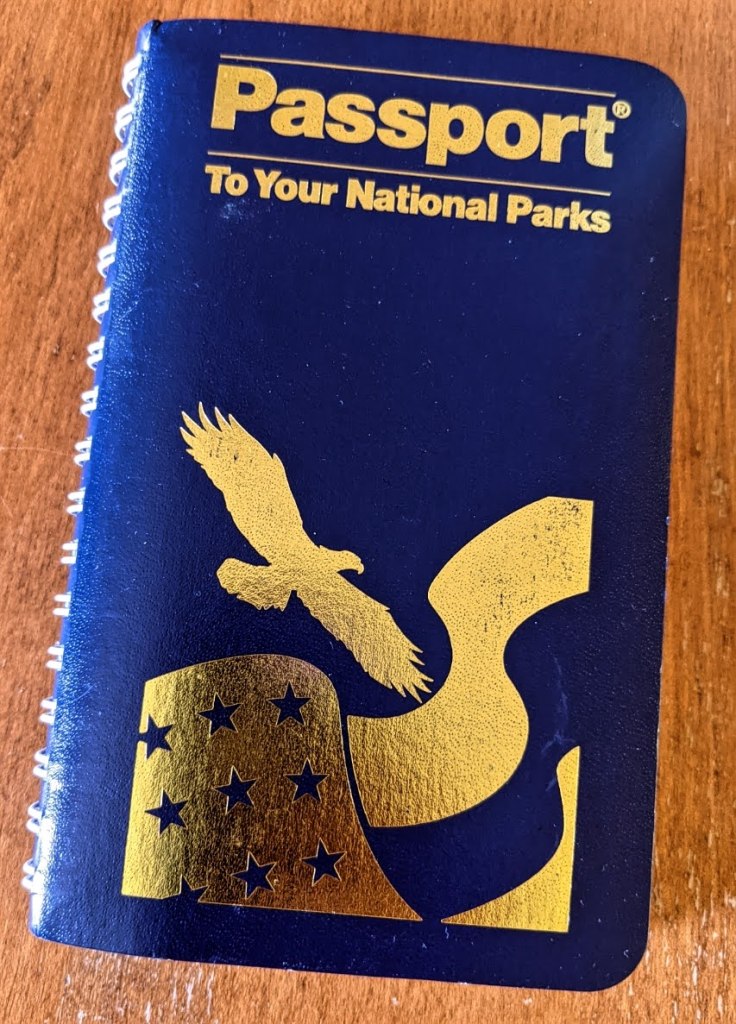
In addition to the photos, t-shirts, and coffee mugs I’ve accumulated as souvenirs of my parks adventures, I also have a collection of “passport” stamps. The National Park Service created a passport book that visitors can use to document their travels.

It divides the country into nine geographical regions; each section of the book features a map and list of the national sites within that region, a bit of background information on the region, and a set of blank pages to use for stickers and cancellation stamps.

Getting your passport stamped is such a fun way to anchor and commemorate a visit to a new park.

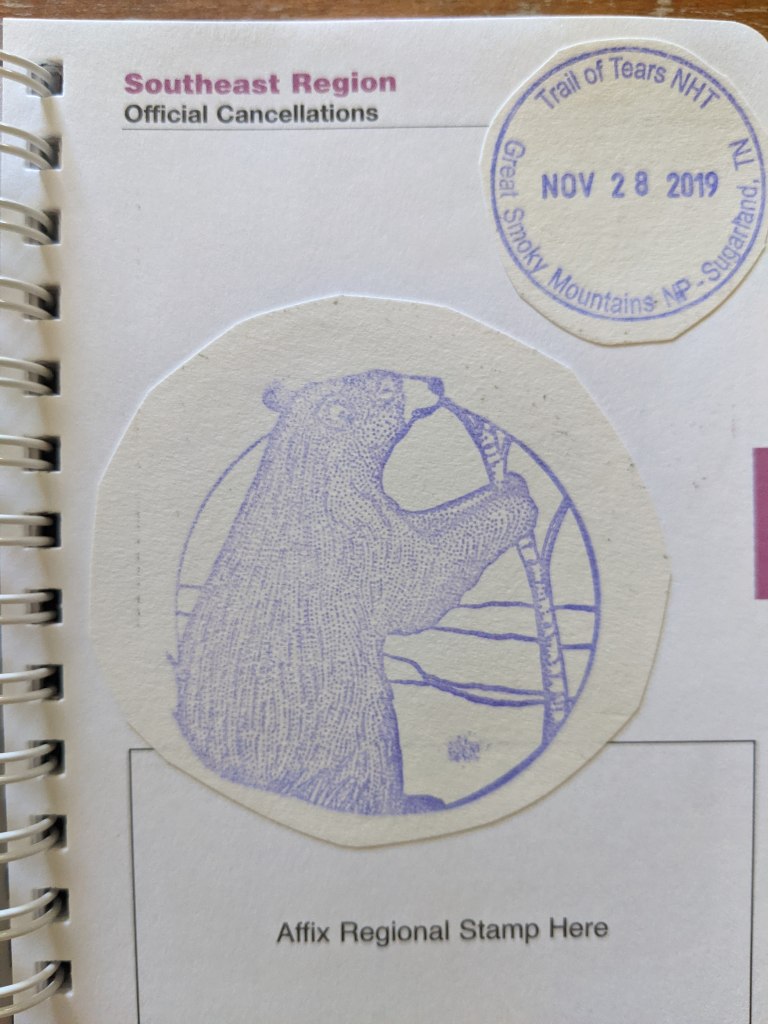
So how’s it work? Every park has a station, typically in the visitor’s center, housing an inkpad and a cancellation stamp featuring the location and current date. Sometimes there is a bonus stamp, maybe a black bear if you are in the Great Smoky Mountains . . .

. . . or a bathhouse if you are visiting Hot Springs.

Turn to the correct section of your book, stamp the page, and voilà. (And if you ever forget to bring your book with you, just stamp on a loose scrap of paper and add it to your book later.)

It is not only at national parks, though, where you can stamp your passport. There are more than 400 areas managed by the National Park Service, from national historical sites and battlefields, to national monuments and memorials, to national forests and lakeshores. . . . If it has the word “National” in front of it, there is a passport stamp to be had. 

And sometimes, you have to be tenacious and creative if you want your cancellation stamp.

In June 2021, I visited Yosemite National Park with my husband, sister, and niece. Yosemite is huge and has several distinct regions within it, featuring giant sequoias, tumbling waterfalls, pristine alpine lakes. Not to mention the iconic edifices of El Capitán and Half Dome, of course.

There are three visitor’s centers—at Wawona, Yosemite Valley, and Tuolumne Meadows—and each has its own cancellation stamp. Obviously, we wanted to stamp our passports at all of them. The trouble came when we drove out to Tuolumne Meadows. (By the way, it is pronounced “too-ALL-uh-me.” I had to google that.) It is a long drive to the meadows from Yosemite Valley, but it is breathtaking. Meandering creeks, granite domes, asters and sedge and pines. During summer 2021 the pandemic was still going strong, and that meant that throughout Yosemite, some park amenities remained closed. We hiked around and explored Tuolumne, but when it came time to stop by the visitor’s center before our drive back, it was closed, and there was no sign of an outdoor stamping station. 

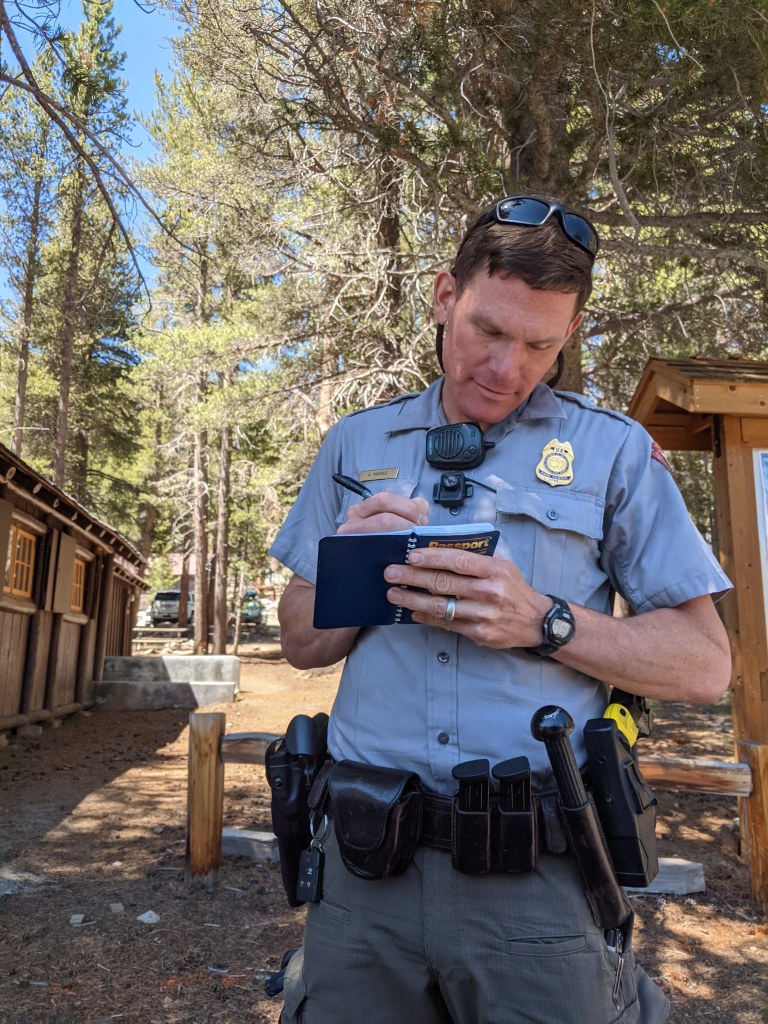
Not cool. We had driven through the park for TWO HOURS, yes to explore the beautiful sub-alpine lakes and meadows, but also . . . to get a stamp. As we trolled around looking for a makeshift stamping station, we spotted a park ranger. We flagged him down and asked, with the merest hint of desperation, if he knew where to find the passport stamp. He did not. But when my sister asked him if HE would draw a stamp in our passport books for us, he didn’t hesitate. He whipped out a pen and cheerfully obliged. It is easily my favorite stamp so far.

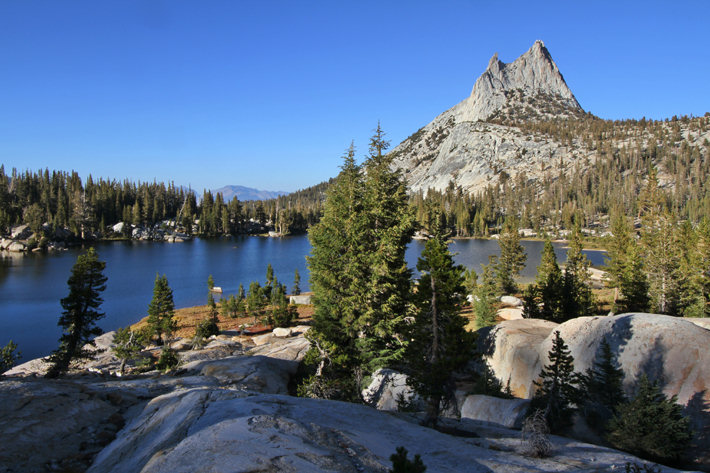
It’s Cathedral Peak!
Cathedral Peak (Source: yosemitehikes.com)

The passport books are a bit of a rabbit hole. There are sheets of stickers you can purchase, a different collection each year, which highlight various sites in each of the geographical regions. These are neat, but I wish I could purchase the regional stickers a-la-carte, because I wind up with a lot of stickers I don’t need. These days I mostly just stick with the cancellation stamps.

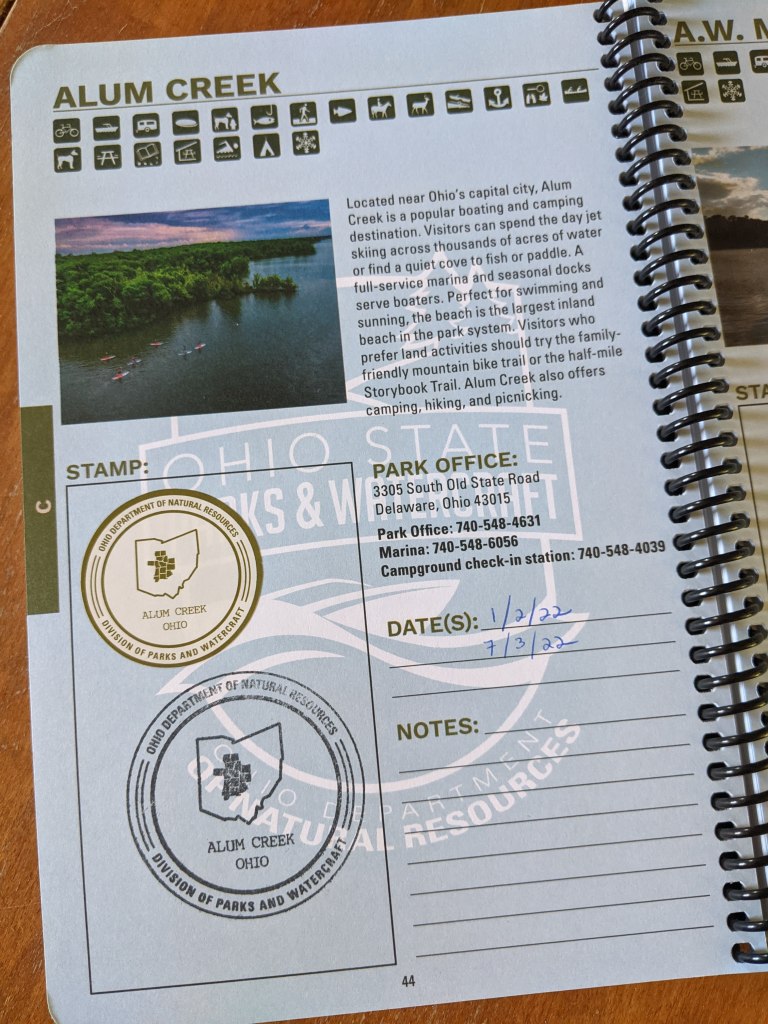
I already had my work cut out for me with the national parks passport book. But then for Christmas, my sister got me a passport book for Ohio’s 75 state parks. I didn’t know such a thing existed!

This passport book includes a set of stickers that you can use to document each park as you visit it, in case you are not able to find the official stamp while you are there. Alum Creek is the park closest to where I live and where I earned my first official stamp.

So I guess that means I have not just two, but three, passports. I’d better pack my bags—I’ve got some traveling to do!

Explore

Marvels and Misnomers at Arches National Park

There are five national parks in Utah (the so-called “Mighty 5”): Arches, Bryce Canyon, Canyonlands, Capitol Reef, and Zion.

Utah’s Mighty 5 (Source: utah.com)

A few years ago my husband and I visited Zion and Bryce; this summer we traveled to Arches and Canyonlands.

Of the four Utah parks we’ve explored, there are some notable similarities. 

They are hot.
They are colorful.
They are rocky.
They are majestic.

Yet each has something unique that distinguishes it from the others.

Arches reveals its claim to fame right there in its name. It is a high-desert marvel of red rock cliffs, fins, buttes, monoliths, spires, and, well, more than 2,000 arches. One of the fun things about the park is discovering doppelgangers in the rock formations. Many of the rocks resemble others things; it’s kind of like seeing shapes in the clouds.

Some of the formations already have names, like:

Elephant Butte…

Elephant Butte

and Three Gossips.

Three Gossips

Can you tell what the next one is? It’s a little tougher. Scroll down to the bottom for the answer. 

?

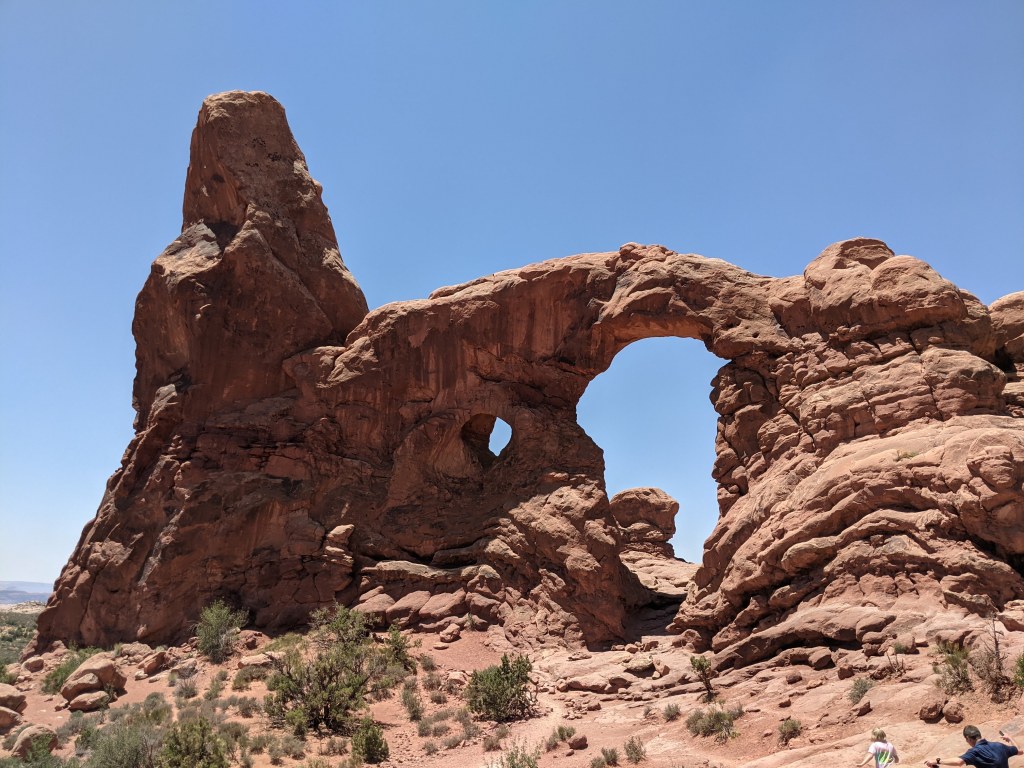
Many of the arches have names as well, like Double Arch and Turret Arch.

In general the names are appropriately descriptive, sometimes amusing or whimsical. There are a few arches, however, that didn’t seem to correspond to their names at all! Read on to find out more about three distinct Arches experiences, featuring plenty of marvels and a few misnomers.

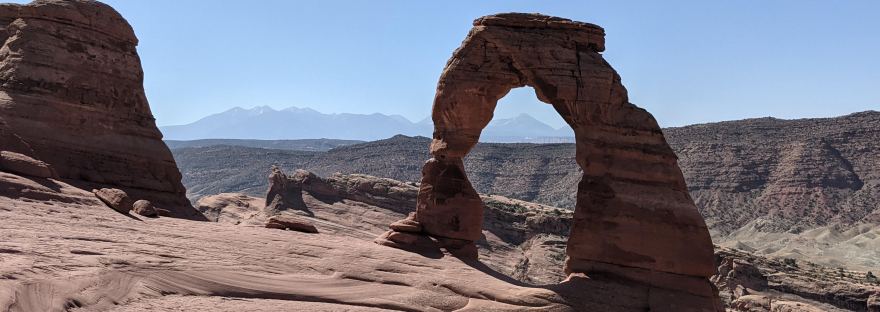
Delicate Arch

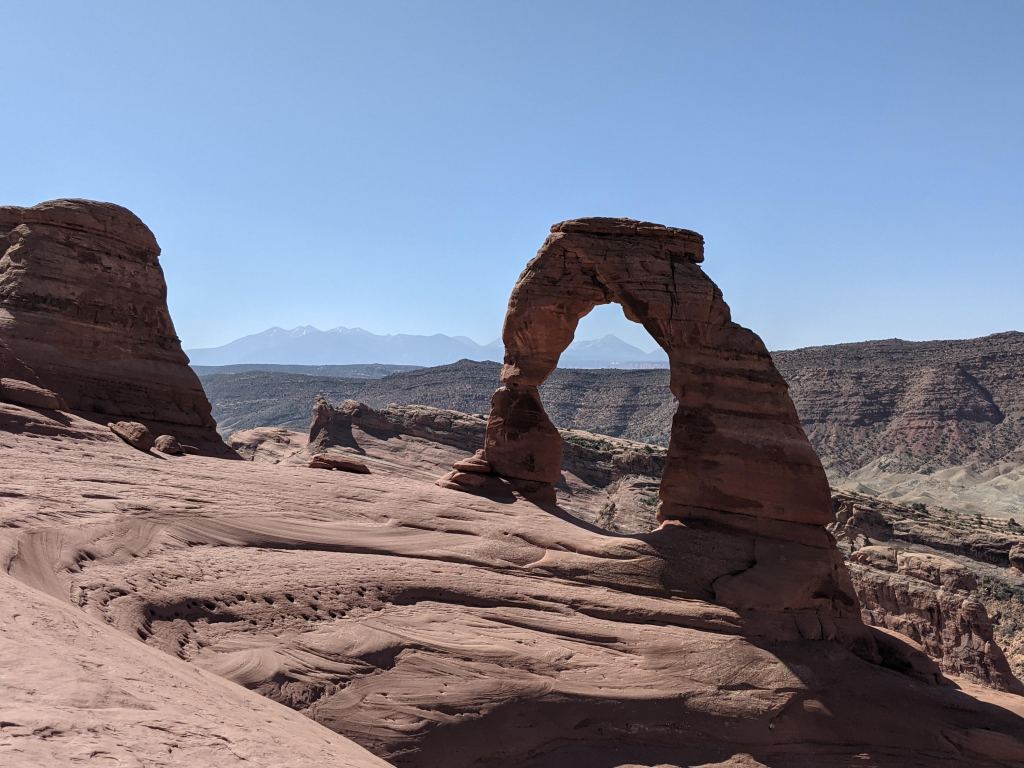
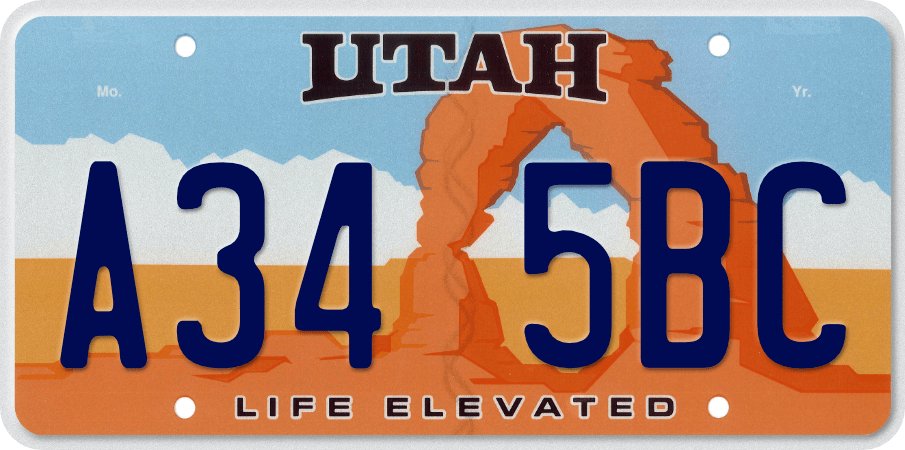
Delicate Arch is probably the most iconic sight at Arches. It is showcased on the Utah license plate, after all!

Delicate Arch
(Source: dmv.utah.gov)

There are two ways to experience the arch. One is by accessing the Upper or Lower Viewpoint trails, which are short and easy, with the tradeoff that you get only a very distant view of the arch. The other option is to hike the three-mile Delicate Arch trail, a moderately difficult trek up exposed slickrock hills and narrow windswept ledges.

The reward at the end of this trail is fantastic views of the arch, with the tradeoff that you will get buffeted by 30 mph gusts of wind. It is intense. At the top, children burrowed into their parents’ chests, trying to avoid the sand blasting their faces. The rest of us staggered around trying not to get blown off the cliff as we posed for pictures.

So windy!

I’m not sure how this arch got named “delicate,” because to me it seemed anything but. I guess it is a bit more slender than some of the arches, and it is perched rather delicately at the top of the bluff, but to withstand the relentless wind up there? Whew. Pretty stout. 

Landscape Arch

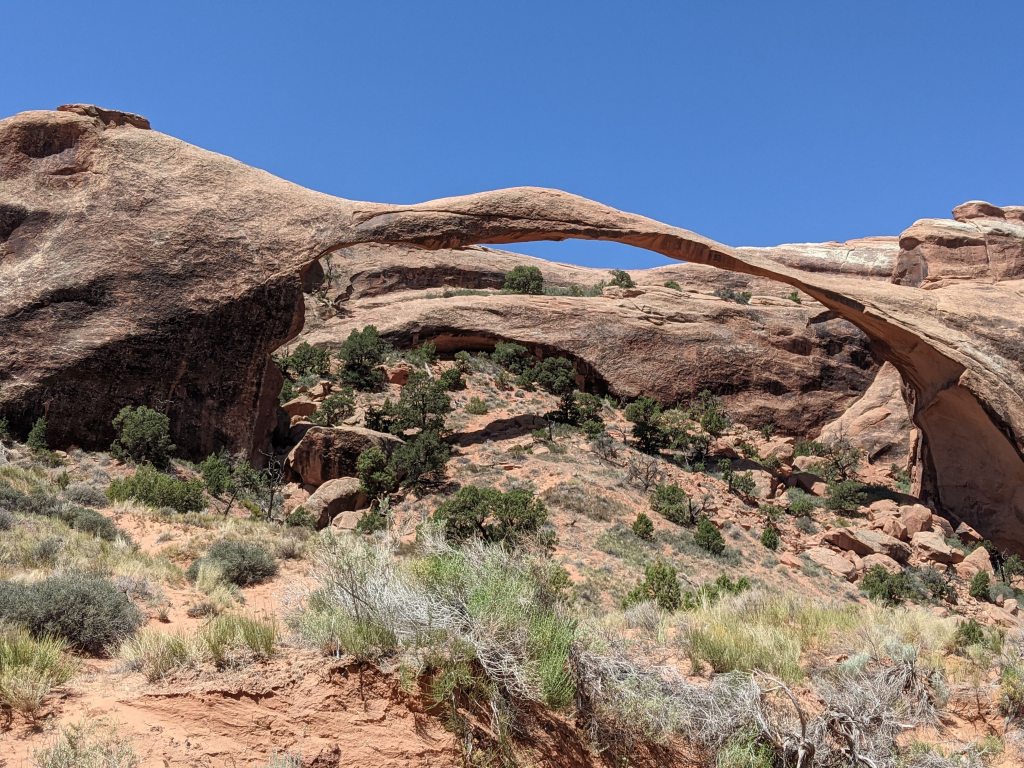
Perhaps they’d had a little too much sun on the day they were naming arches, because Landscape Arch is actually much more delicate and graceful than Delicate Arch. Spanning almost 300 feet, this ribbon of rock is the longest natural stone arch in the United States and one of the longest in the world.

Landscape Arch

It wasn’t always quite so slender though. In the 1990s several slabs and chunks of rock broke off and fell from the arch, reducing its girth and necessitating closure of the trail passing underneath it. Landscape Arch is one of many in the Devils Garden section of the park, and you can enjoy its beauty by hiking a relatively easy one-mile (each way) trail. Short spurs nearby lead to a few other arches, like Pine Tree Arch. Which, aptly enough, features a tiny pine tree beneath it. 

If we someday return to Arches, I would like to explore the Devils Garden area more thoroughly. There are about eight miles of trails, with rocks and fins to scramble on and hidden arches to discover. With temperatures hovering around 100 degrees on the days we were there, it was simply too hot to hike around all of it.

Tapestry Arch

I have a theory about the trails at national parks. I think that every park has one trail that the rangers agree to downplay and keep quiet, allowing for adventurous hikers to discover and delight in its unexpected solitude and beauty. That trail at Arches is—should I reveal it?? I must. It’s the Sand Dune Arch-Broken Arch-Tapestry Arch trail. And I’m not going to complain about these arch names. Sand Dune and Broken are pretty spot-on. “Tapestry” is kind of bland and uninspiring, but that’s how we’ll keep too many people from finding it, see? We’ll deploy the ol’ Iceland / Greenland naming strategy

Here’s how our hike unfolded. By the end of our second day at Arches, we were pretty depleted by the cumulative effects of the heat, wind, and elevation. Feeling like our work at Arches was complete, we began driving out of the park. But then we noticed the turnout for Sand Dune Arch, which is billed as a short easy hike. Why not stop and see one last arch before leaving? 

We walked the sandy 0.3 mile trail to Sand Dune Arch.

Sand Dune Arch

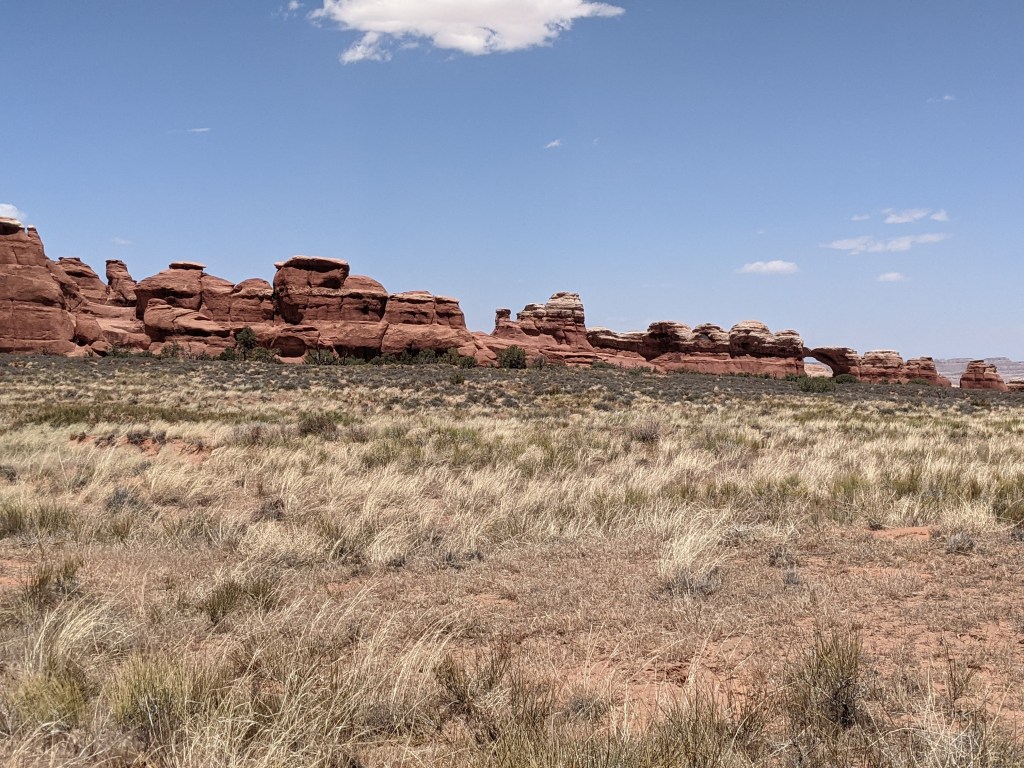
Then we noticed that across the meadow (just another mile) Broken Arch beckoned. Well, since it was right there, we walked over.

Broken Arch (See it? Over on the right?)

Once we arrived, there was signage that encouraged hikers to climb through the arch to continue on the trail. We figured we should climb up just to take a look . . . but then we kept walking. I mean, at this point it was just a little farther to the third arch, Tapestry Arch.

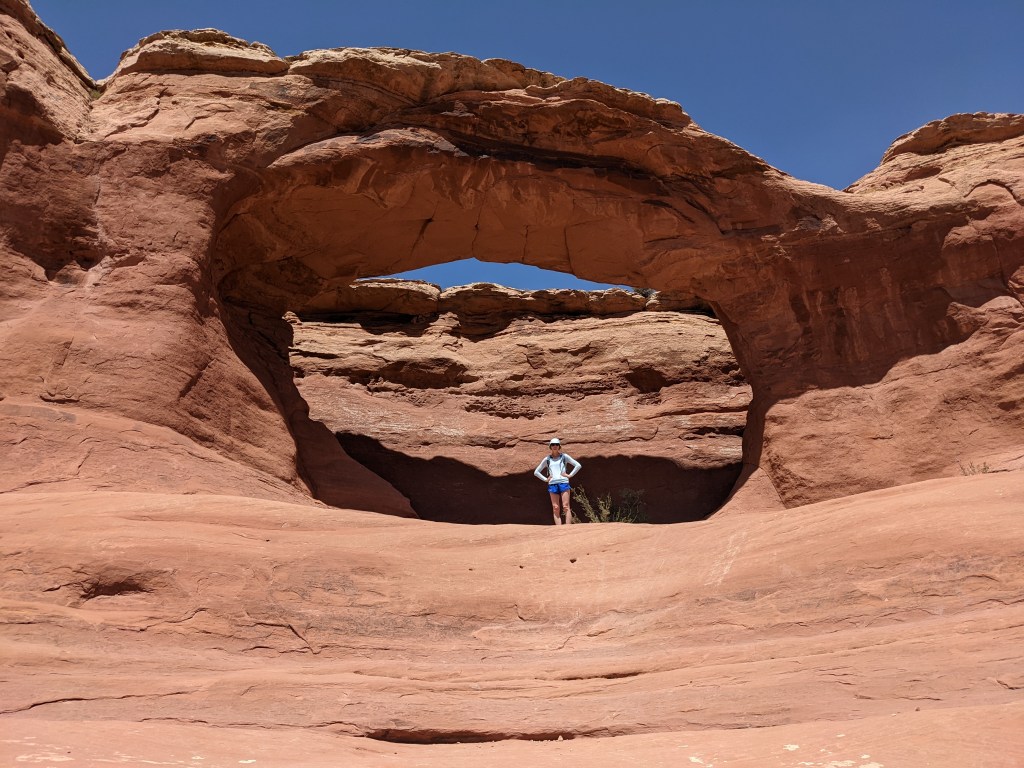
This was where the trail really turned magical. How was it possible that in a park with hundreds of visitors, we had this trail all to ourselves? We didn’t encounter another soul (except for some lizards) as we followed the carefully-situated cairns to Tapestry Arch. Without the cairns we would have gotten hopelessly lost as we scrambled up and down and over and through the rocks and hills. When we got to the arch we clambered up into its cool recess to sit and marvel at the landscape and the quiet.

Tapestry Arch

It turned out to be the perfect hike to cap off our visit to Arches. It was an unexpected adventure, but often those are the best ones.

I know we’ve got another visit to Utah somewhere in our future, because Capitol Reef is still on the must-see list of parks. When we go, I’d love to stop at Arches again and discover even more of its hidden gems.


Two things to know before you go:

1. Like several other national parks, Arches is piloting a timed entry system during peak months of the year. You must have a reservation to enter the park. They say that the goal is not to reduce the number of visitors, but rather to spread them out more evenly throughout the day, to reduce congestion at the entrance station, in parking lots, and on the trails. Be sure to check the website several months in advance of your visit to make sure that you get your pass, if necessary!

2. Download the National Park Service app. It’s incredible. You’ll find alerts, maps, things to see/do, locations of passport stamps. And one of my favorite parts—a fun little feature that allows you to create virtual “postcards” to send to friends and family.

Answer: Sheep Rock