
At some point, we’ve all probably wrestled with questions about the meaning and purpose of our lives. Are we making the most of our time and talents? Do we feel fulfilled on a day to day basis? Could we be happier if (this) or (that)?
As I undertook a little journey to learn more about purpose and contentment, I came across the teachings of several people whose work can transform how we think about happiness and well being.
First up is Tim Tamashiro. If you search for information about finding meaning or purpose in life, I wouldn’t be surprised if your search results include something about Ikigai.
Ikigai (pronounced “EE-kee-guy”) is a Japanese concept that translates to “life’s worth.” It’s your reason for being. Who doesn’t want to know what their life’s purpose is? But that’s a really big question. To home in on your Ikigai, consider where these four smaller questions intersect:
- What are you good at?
- What do you love to do?
- What does the world need?
- What can you feel rewarded for?
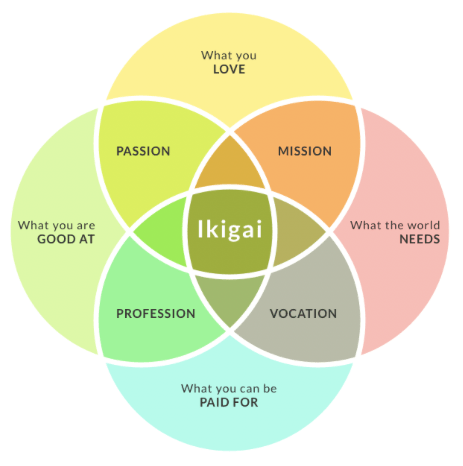
Clarity and action on some or all of those questions will bring you ever closer to your Ikigai.
The first few books I read about Ikigai were a little abstract, but then I read Tim Tamashiro’s book, How to Ikigai. Tamashiro’s personable writing and actionable advice made Ikigai discovery feel within reach.
At one point, he referenced an online course available through Coursera.org. It’s called “The Science of Well-Being” and is taught by Dr. Laurie Santos. You can audit the course free of charge. It is the online version of a class Santos teaches at Yale, one of the university’s all-time most popular courses. Santos leads us through the many reasons why the things we think will make us happy (such as good grades, the perfect job, and “awesome stuff”) actually do not. Then she lays out proven and practical ways that we can enhance our well-being.
Throughout the highly engaging series of lectures, I noticed that Santos cited a number of studies from Sonja Lyubomirsky, professor of psychology at the University of California, Riverside.
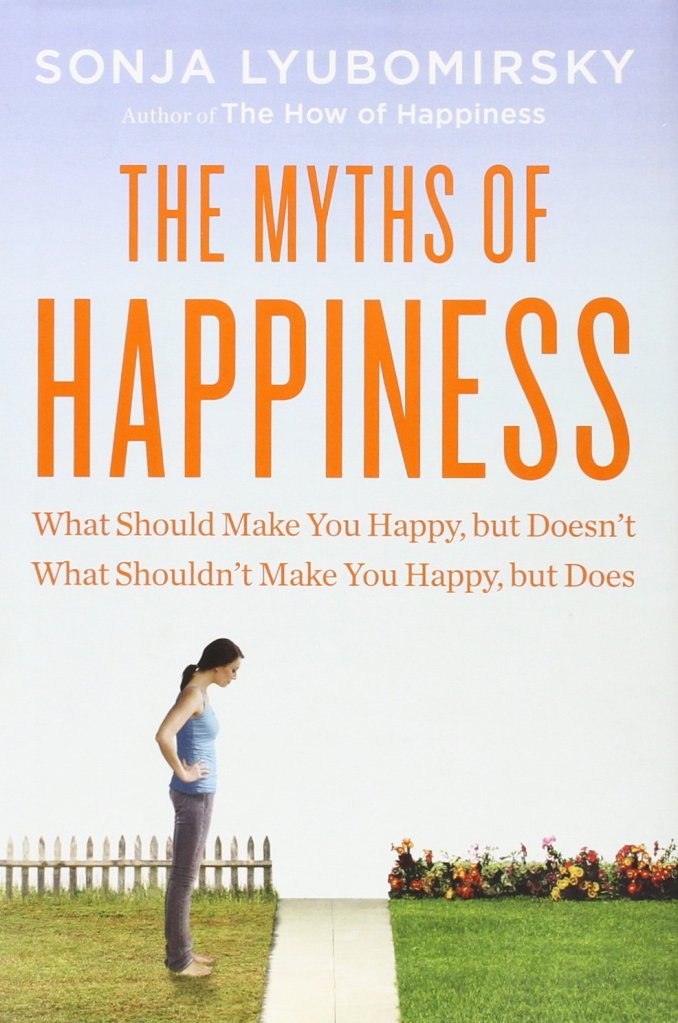
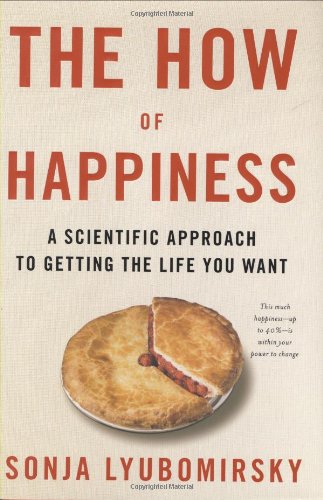
So my next step was to read Lyubomirsky’s book The Myths of Happiness. There is considerable overlap between the concepts in this book and the course by Laurie Santos, but basically Lyubomirsky goes further into the science of why all those things that we think will make us happy (perfect spouse, perfect job, more money) actually don’t. Thankfully, she also explains how to outsmart the myths to discover greater happiness.
I really enjoyed learning more about The Myths, but it was another book by Lyubomirsky, The How of Happiness, that really has stuck with me. The major premise of the book is summarized by this simple pie chart that breaks down the components that contribute to one’s happiness in life:

Ten percent of our happiness in life is based on our life circumstances. Are we rich or poor? Single or coupled? Canadian or Cambodian? These things matter, but not as much as we imagine.
50 percent of our happiness comes from our genetic set point. Some people are naturally more optimistic and positive than others. Thanks! 🙂 or Thanks  mom and dad.
However, we control a startling 40 PERCENT of our overall happiness with our intentional activities. With our actions, we hold the keys to becoming 40 percent happier.
That’s pretty empowering!
In the book, Lyubomirsky outlines 12 different activities people can do (though she does not recommend that you try to implement ALL of them). Rather, there is a quiz to ascertain your person-activity matches—those things that are most suited to what you need but also what you are most likely to follow through with and enjoy. If you hate doing something, it is not likely to become an ongoing or enjoyable habit for you.
The thing I appreciated most about each of these authors and scholars is that they offered practical advice. Tangible, actionable steps I could implement to increase my happiness quotient. I didn’t necessarily believe at first that happiness was something that could be rigorously studied and quantified, but people ARE studying and quantifying happiness. And their work has the potential to help a lot of people.
It’s certainly helped me!





 Don't Fleece the Bees