Explore

Ohio Bird Sanctuary

In the past few years, I’ve become mildly obsessed with birds—identifying them, recognizing their calls, learning more about their abilities and behaviors. They are such beautiful and intelligent creatures! 

I get to see plenty of songbirds up close at the feeders and birdbath outside my house, but I rarely catch sight of large raptors, and certainly not close enough to really observe their features. So I was excited to visit the Ohio Bird Sanctuary in Mansfield, Ohio, about an hour north of Columbus. It’s a nonprofit organization dedicated to rehabilitating injured or orphaned birds. Though the primary goal is to release birds back into the wild, sometimes that is not possible. There are about 60 birds—including a number of raptors—that live as permanent residents of the Sanctuary, housed in enclosures on the peaceful 90-acre preserve.
On a crisp, sunny morning, I traveled the rural roads of Ohio to the Sanctuary. I stopped in the visitor center to pay the admission fee ($3 for adults) and chat with the volunteer greeter. She gave me a map of the grounds and a brief orientation before I went outside to meet the birds. 

The Birds

You might expect a collection of 60+ birds to be cacophonous, but in fact most of the residents were quiet and watchful. Only the crows, true to form, were rowdy and raucous—much like a flock of middle schoolers in the cafeteria after a year-long pandemic hiatus.

Every owl, falcon, hawk, osprey, vulture, crow, and bald eagle who calls the Sanctuary home has a name and a unique story. Each spacious enclosure houses only one or two birds, so they have plenty of room to perch, walk, and even fly about. Several raptors were hit by cars, sustaining injuries to their wings. Some (like Saint Alice) suffer from long-term effects of illnesses like West Nile Virus. Others were found orphaned or abandoned, unable to care for themselves in the wild.

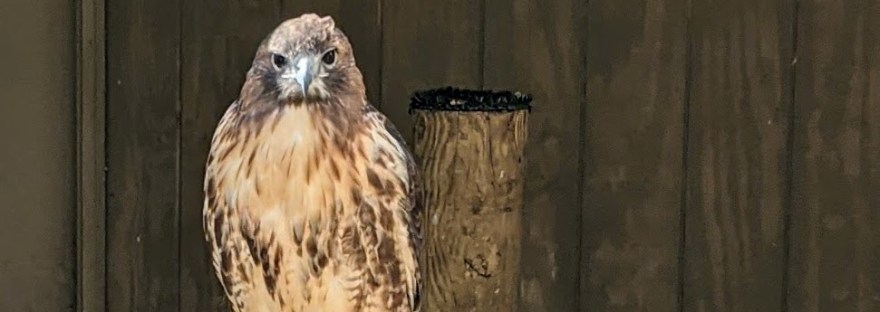
Ruby, a Red-tailed Hawk, suffered a damaged wing when she was shot.

Seeing the birds up close, I could really appreciate their uniqueness, beauty, and size.

Barkley, a Barred Owl, was injured in a barbed-wire fence.
Saint Alice, a Bald Eagle, made an audible “thud” as she hopped from one perch to another!

In addition to the individual raptor enclosures, there is a larger aviary where various songbirds coexist. Visitors can walk through the songbird house and even purchase a tiny cup of seed to feed the cardinals, bluejays, finches, and doves. If you’re lucky, one of the birds might even land on you.
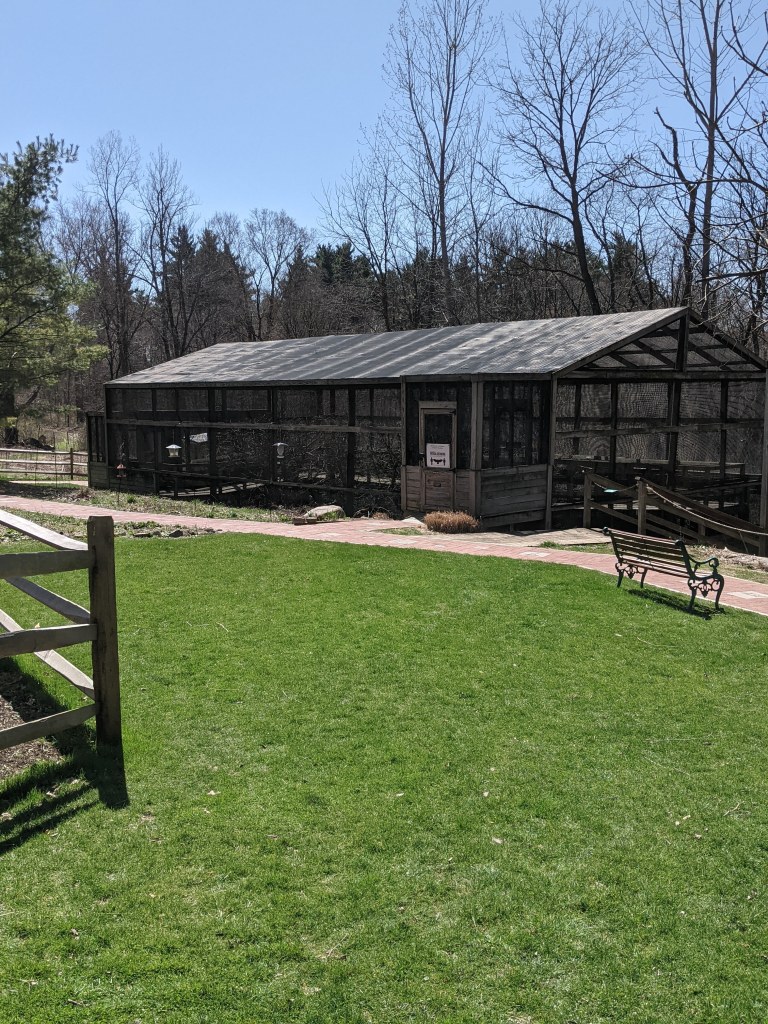
The songbird aviary

However, one of the biggest surprises of the day was an encounter with this guy.
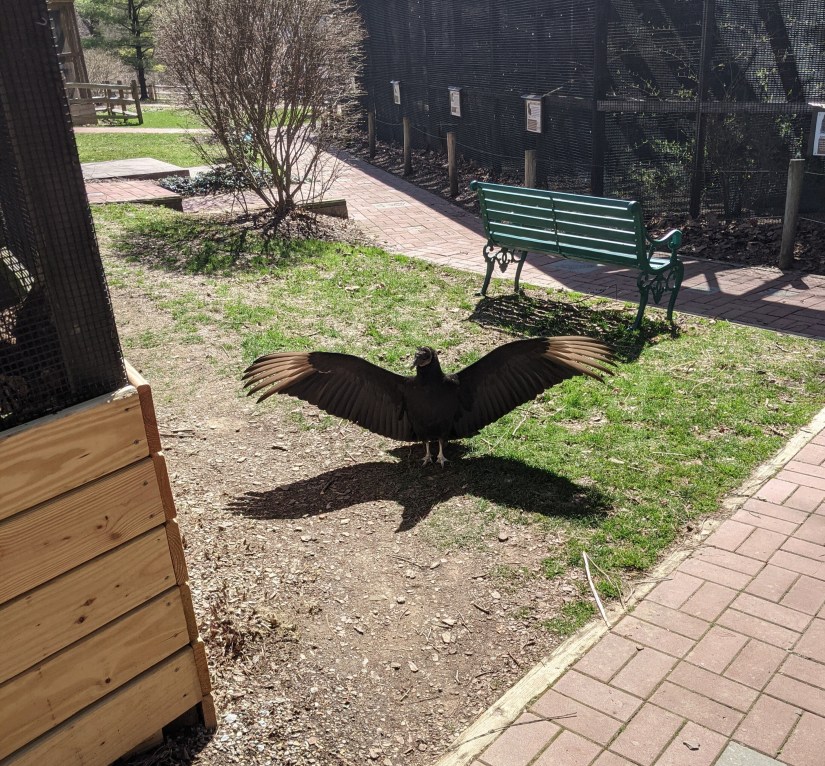
My first thought was, How did this bird get out of its cage!? But it was a wild vulture, airing out his wings for a moment as he visited the Sanctuary. Or more accurately, as he tormented the crows. They had been the noisiest birds all day, but they REALLY went berserk at the uninvited guest. The vulture lazily flapped up to the top of the crow enclosure, poking and prodding at the wires while the crows squawked in outrage.

The Trails and Treehouse

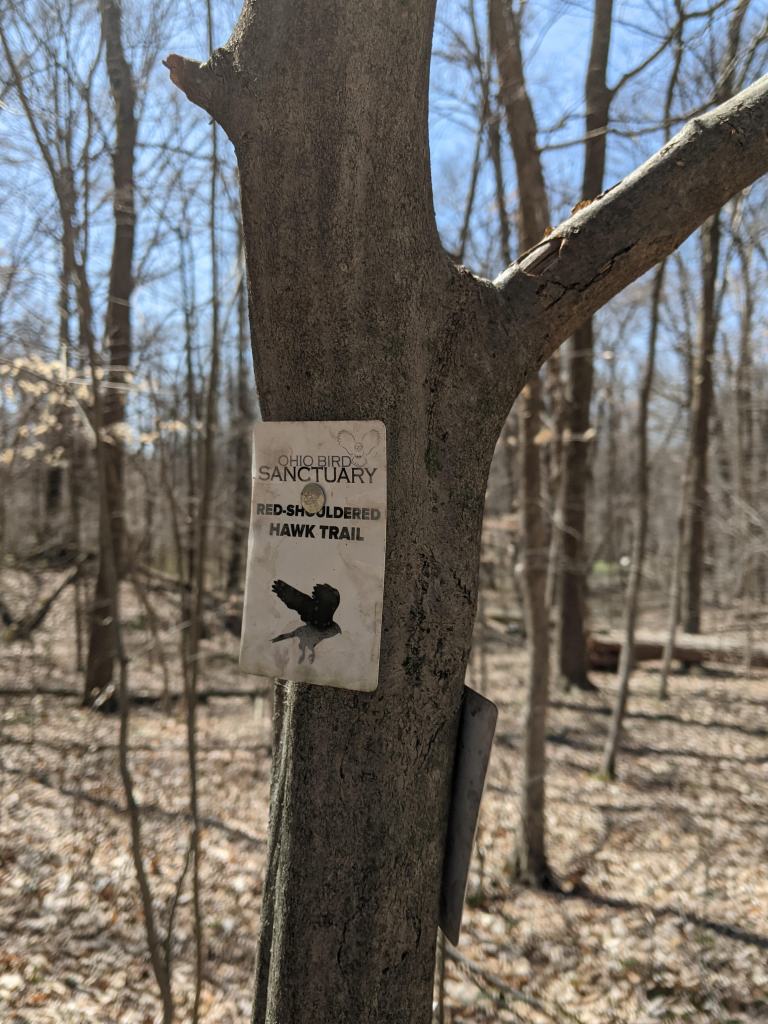
In addition to the aviary, the Sanctuary features several miles of beautiful trails, including one along the Clear Fork River. The birds were the main attraction, but I couldn’t resist a walk in the woods. On the day I visited I basically had the trails to myself. There are cozy picnic areas tucked throughout the trails, as well as activities for children. It would be hard to get lost since the trails are not very long, but even so they are marked with charming and helpful “bird blazes.”
One of the newest projects at the Sanctuary is a treehouse classroom. Volunteers and experts from Nelson Treehouse finished the 100-foot bridge connecting to an open-air treehouse in summer 2021.

Programs and Support

The Ohio Bird Sanctuary offers a number of programs for visitors of all ages. Every Saturday they hold an “avian encounter” during which visitors can meet one of the bird ambassadors up close. Other on-site program options include workshops, camps, and tours. You can even host birthday parties there. For something more in-depth and personal, schools and organizations can arrange outreach visits from the birds and their caretakers. These days, of course, there are also “virtual” programs available. So many options!

If you are as impressed with this place as I am and want to support its work, you can do so in a variety of ways. 

  • Become a member
  • Adopt a bird
  • Make a donation (they have a wish list of items on Amazon; toss one in your cart)
  • Purchase a memorial paver or bench
  • Volunteer your time!

Want to Learn More?

I’ve learned a lot from the resources listed here, and I think any fledgling or experienced birder would enjoy them as well:

  • What It’s Like to Be a Bird by David Allen Sibley. He is not only a master ornithologist, but also a talented artist and writer. This should be a coffee table book in every household.
  • The Genius of Birds by Jennifer Ackerman. This book details what a compliment—rather than an insult—it should be to call someone a “bird brain”! She recounts stories and research studies that highlight birds’ amazing abilities, from memory skills to musical talents to social prowess. It’s a fascinating read.
  • The Cornell Lab of Ornithology website is an incredible resource for learning more about all things bird-related. I’ve had a lot of fun listening to their collection of bird call recordings and trying to match them up with the sounds from my backyard feeders and metro-park rambles.
Explore

Busy as Bees at Monkey Hollow

I visited Monkey Hollow recently to help with the honey harvest. Monkey Hollow is a small farm not far from where I live, and it’s kind of a magical place. For one thing, it’s a beautiful property, with woods, meadows, fields, a pond; chickens, lambs, and bees. For another, the owners, Al and Jill, are naturalists who know about everything! Al might humbly correct that they know a little bit about a lot of things, but my experience with them points to the former. I learn so much every time I see them.

IMG_20190730_162026
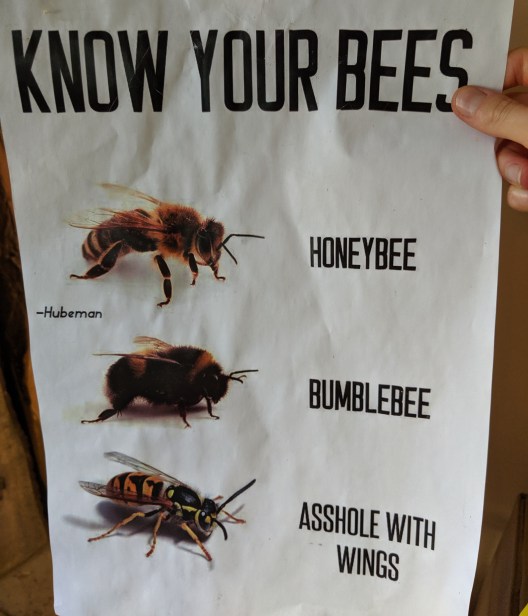
A helpful chart on display in the equipment room

On this trip to Monkey Hollow, I was looking forward not only to extracting and bottling honey, but seeing the actual bee hives. At first, though, a visit to the hives looked a bit unlikely since it was a rather rainy day. The bees like to stay home when it’s rainy rather than go out foraging, and they can be cranky when people come and disturb them. I can relate, I suppose. I also like to curl up and enjoy a quiet day at home when the weather is gloomy. But as luck would have it, by the end of our honey extracting work (learn more about that in THIS post), the clouds disappeared and the sun came out, making it a perfect day to see where all that honey began.

img_20190730_160524


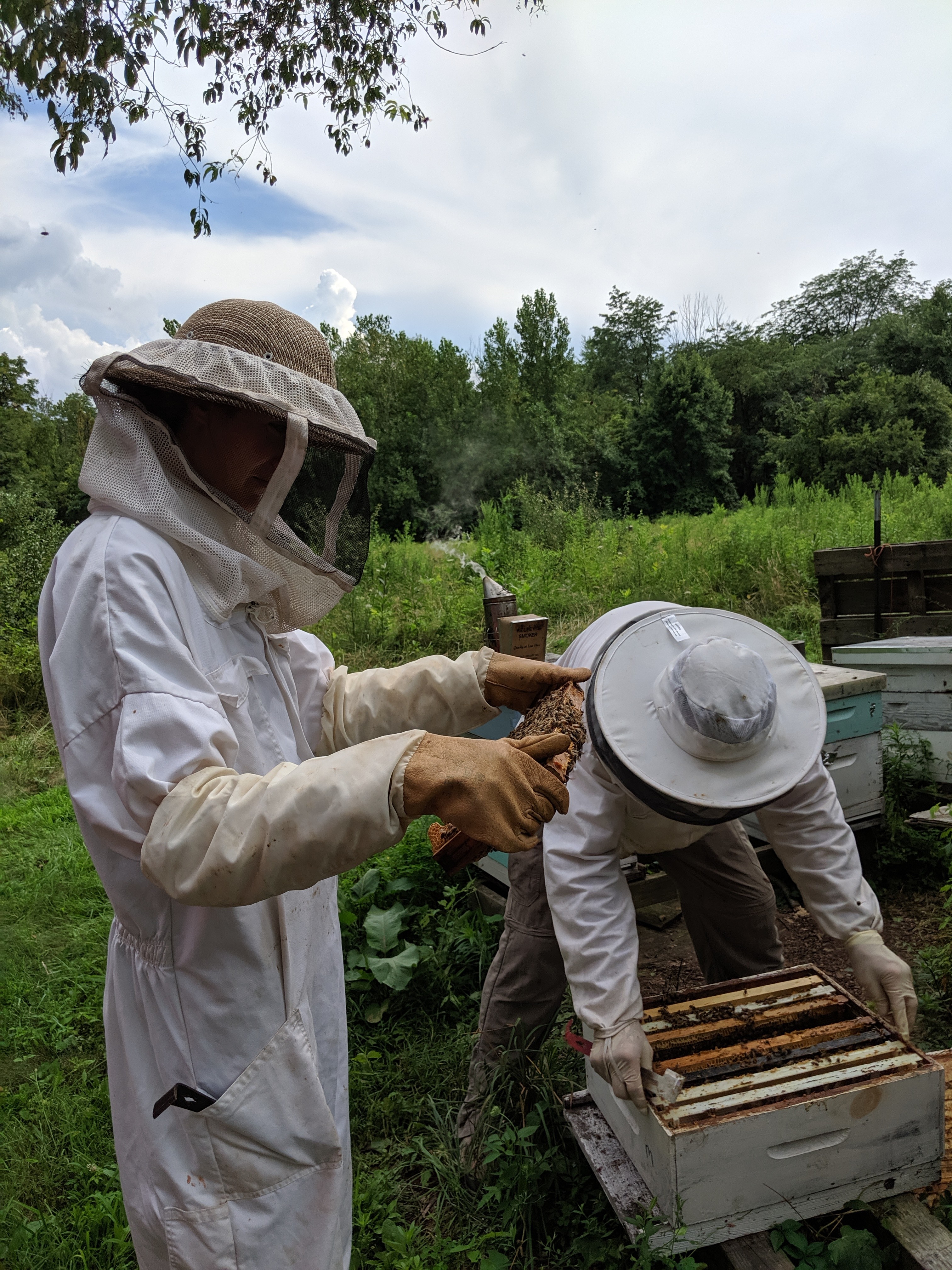
The first order of business for a trek out to the hives was to suit up. Al had plenty of extra bee-suits for visitors. He explained that the suits are white because to the bees, the white blends in with the sky and becomes part of the backdrop. (However, a dark color, like black, looks like a bear to them. Fair warning!) I felt very protected: thick, tightly woven suit all zipped up, gloves in place, head net secured. I was eager to see the bees, but I really did not want to get stung. It’s been decades since I’ve had a bee sting, but with the way I swell up from mosquito bites, I could only imagine how painful a sting would likely be. 

(Of course, I didn’t think to ask the question until we were out at the hives, surrounded by thousands of bees: Wait, can you get stung through these suits? “Oh yes!” Al cheerfully replied. “And after a bee stings, it releases an alarm pheromone to alert other bees to try to sting that same spot.”)

So I was a little scared. But I made sure to take nice slow breaths and exude nothing but calm, positive vibes. I mean, those bees are all about the pheromones. No fear to smell on me!

Al’s bee hives are comprised of stacks of boxes called supers. Each super has nine frames hanging within it on which the bees construct their hives, lay their eggs, and produce their honey.

Al began by filling a small canister with wood shavings. The smoke is a way of saying “Hi” to the bees and alerting them to your presence, but it also can help you gently maneuver them this way or that. Whenever Al needed to restack one of the supers on the hive, he’d hit the box underneath with some smoke to shoo the bees downward and reduce the number that might get squished. Unfortunately, a certain number of bees fall victim anytime the beekeeper tends the hives. Al estimated about 140 or so. And yet a good beekeeper must keep up on his or her hives, checking them every few weeks to ensure the health of the hive and stave off any infestations or problems.

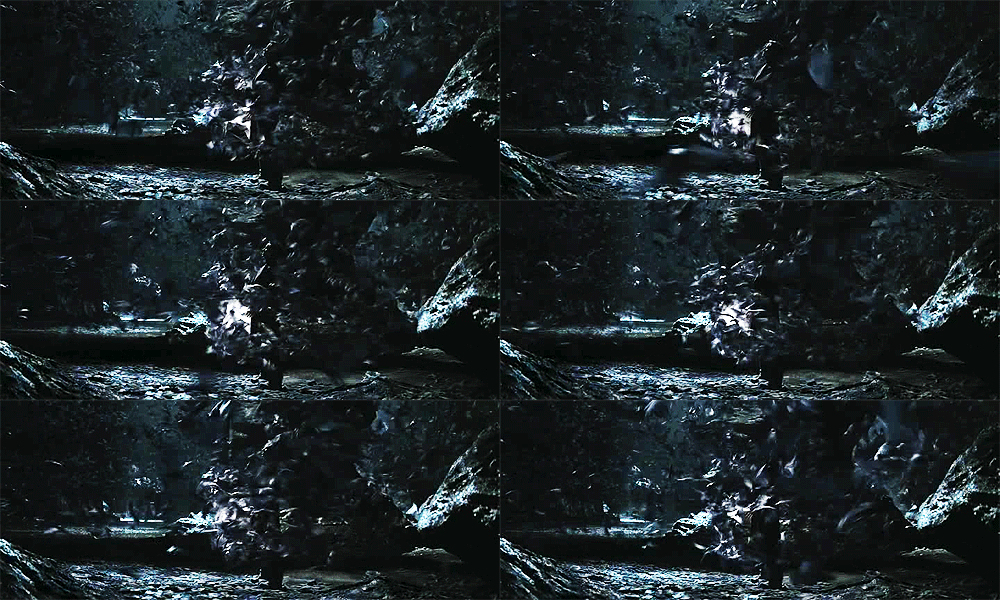
As Al prepared his smoker and tools, I stood in the clearing and listened to the hum of activity. There was a constant stream of bee traffic in and out of the hives. Hundreds; thousands! I had to resist the instinct of flinching from or waving away bees that came too near, reminding myself that I was protected from them (well, you know) and didn’t need to worry. Remember the scene in Batman Begins when the bats are swarming around grown-up Bruce Wayne (played by Christian Bale) in the cave, and he slowly rises and calmly stands in their midst? It was kinda like that. 

batgif-2

Al opened up one of the hives and began prying out individual frames to check on the bees. He uses a small tool that looks like a mini crowbar to dislodge the frames, which become sort of glued in place by a substance called propolis. Also known as “bee glue,” propolis is a sap or resin that bees collect to repair, seal, and protect their hive, and in fact we spotted one bee with her tiny saddlebags full of the reddish material. Apparently, even in ancient times people recognized the healing and antifungal properties of propolis, and it remains a highly sought health supplement today. 

img_20190730_160813

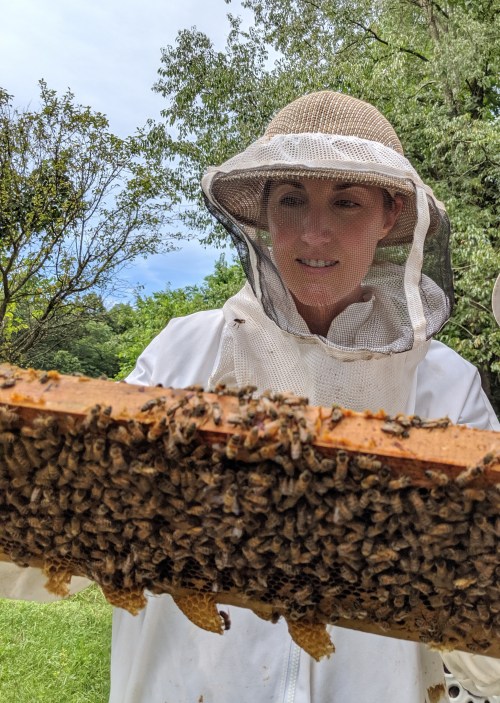
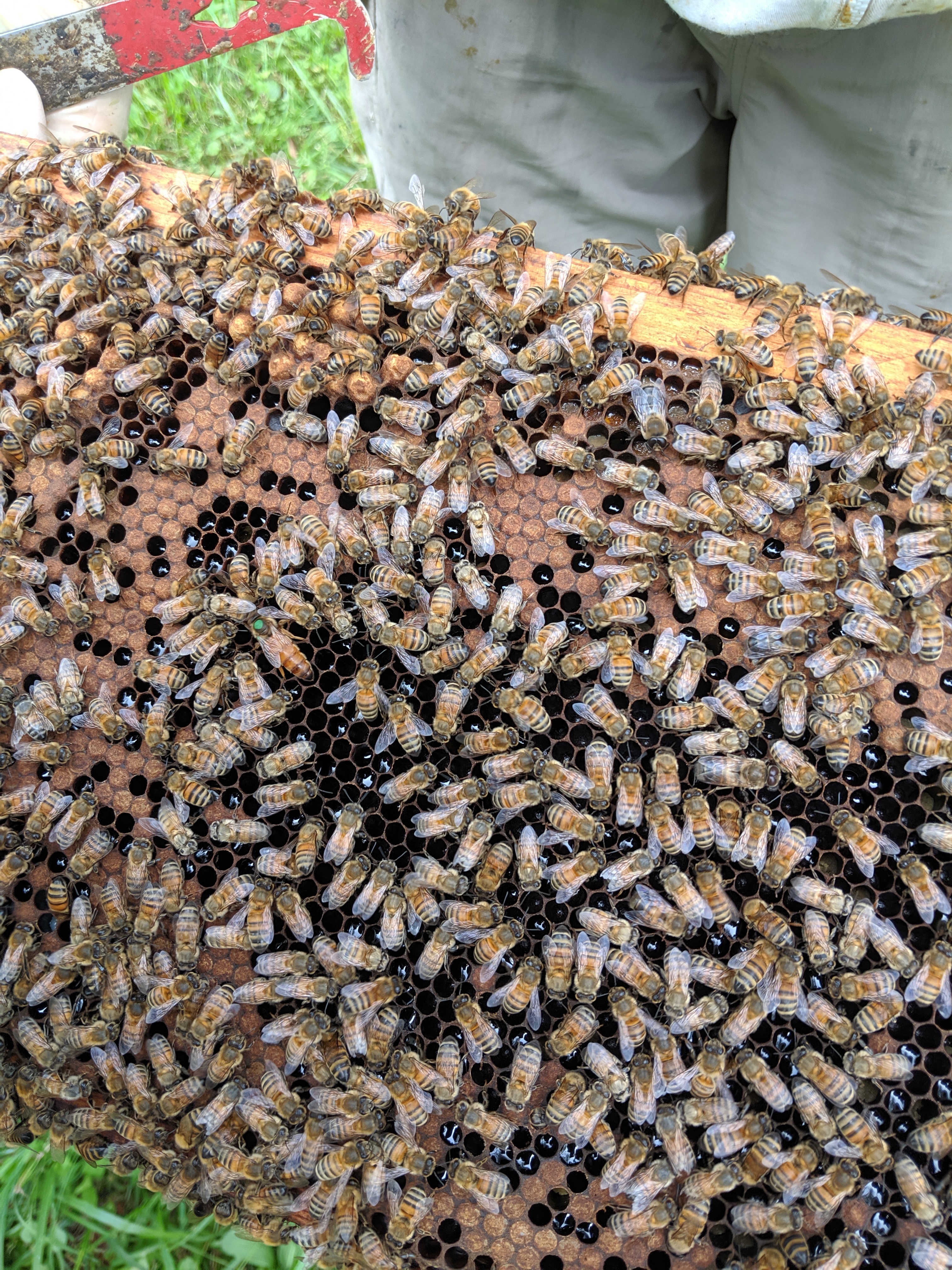
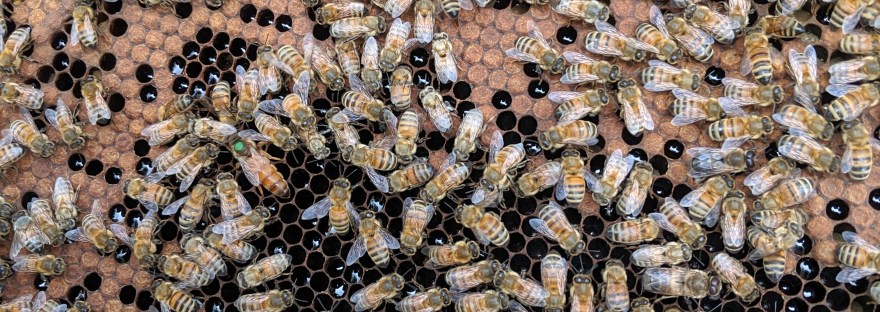
Al’s been a beekeeper for so long that in a glance, he recognizes a million details that I wouldn’t notice even if I stared at the frame for hours. To make it easier to find the queen bee in each hive, Al marks her with a tiny dot of paint, using a different color each year. (This year, it was green. Can you find her in the photo?)

IMG_20190730_155858_1

Speaking of queen bees, that reminds me of a potentially awkward scene we had in the workshop. Al showed us some eggs and larvae on one of the frames, which triggered a few questions from my curious three-year-old nephew: Where is the mom of all the baby bees? Where’s their dad?

The other adults in the shop cast their eyes around, unsure how to tackle such a fraught topic, loathe to describe the gory intricacies of apiary copulation to a three year old. I quickly slipped into Teacher Mode and stepped forward, kneeling down to answer him. 

“Well, you see, a queen bee takes one mating flight in her life, during which anywhere from 10 to 20 drone bees—lured in by her irresistible pheromones—deposit their seed in a marvel of midair choreography. However, the drone must eject his seed so forcefully into the queen that it rips off his endophallus and tears his abdomen, and he dies.”

He nodded thoughtfully and ran outside to chase the chickens.

I’m kidding! He’s three for goodness sake. We told him the moms and dads were back at the hive. 

But it is true that drones go out in just such a blaze of glory. And then the queen, full of semen, returns to the hive where she spends the rest of her days laying and fertilizing eggs, around 2,000 per day, in the cells of the hive. The eggs are tiny, hardly even as big as a pinhead. Even when I knew where to look, it was still hard to see them.

To the untrained eye like mine, a beehive is clearly a busy place, but the more I learn about bees, the more I can admire the organization and complexity of their communities. The hive has a rigid social organization in which each bee diligently executes his or her assigned role. They are unselfish in maintaining the wellbeing of the hive. 

I’m not sure we’d want our human community to be a macro version of a beehive, necessarily, but surely there are some lessons there for us. If we all thought a little more about others and a little less about ourselves, it might just make life a little sweeter all around.


Sources/References:

Batman Begins gif
Honey Bee Reproduction
Propolis


Explore

A Lesson in Humility

Spring is my favorite season of the year in central Ohio.

In winter, we curl inward, hunker down, and brace against the cold. We clad ourselves in knitted helmets and puffy armor to do battle with winter.

And then one day, finally, spring arrives. My shoulders loosen and lower. I take a nice deep breath. Nature transforms into a Seussical wonderland, trees daubed with fragrant pink fluffs and covered with lacy veils of delicate buds. The goldfinch sloughs off his drab winter disguise and pulls his bright yellow cape out of storage.

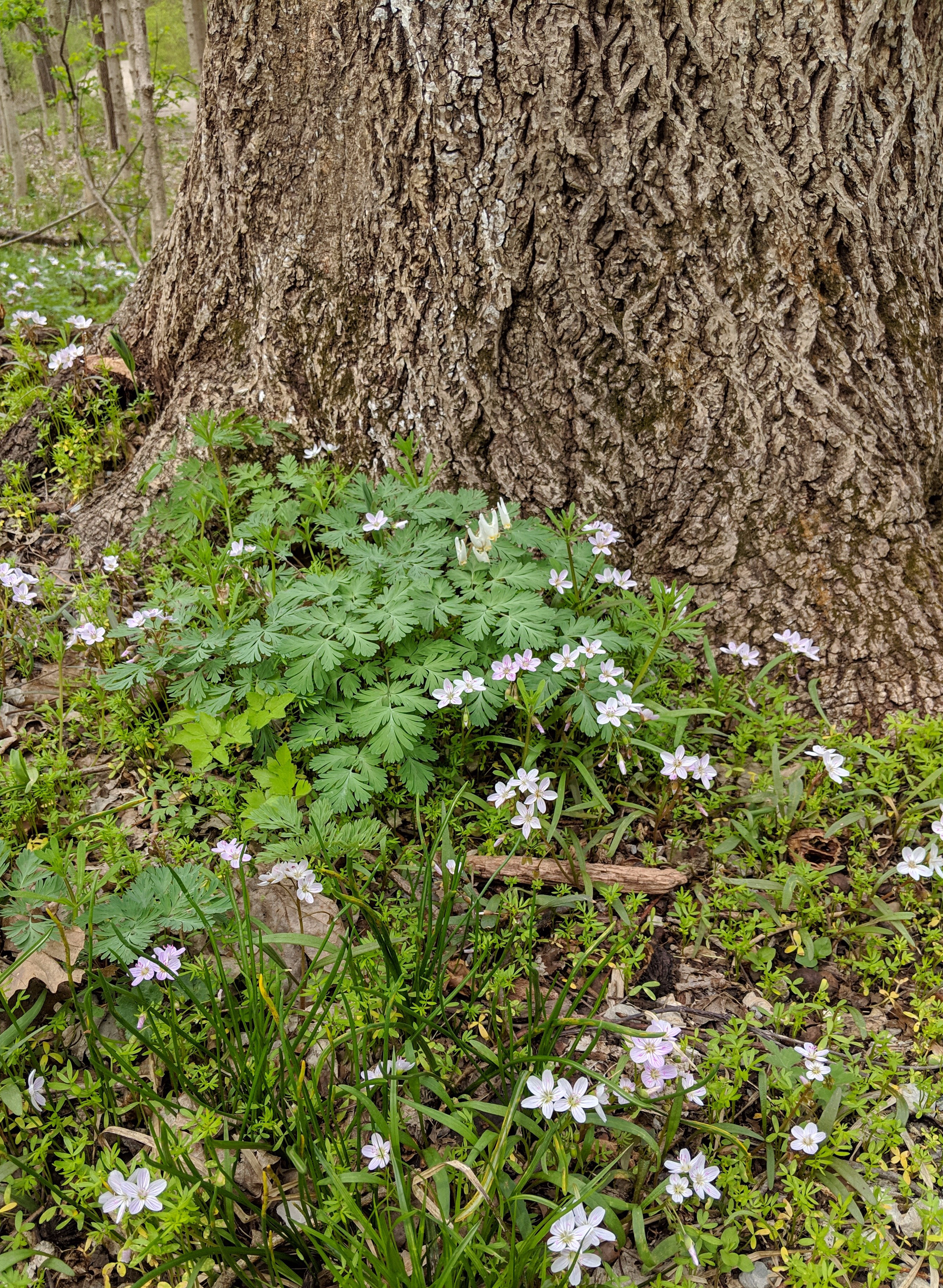
But the sign of spring that I anticipate above all others is the gentle emergence of the spring wildflowers.

img_20190418_155953.jpg
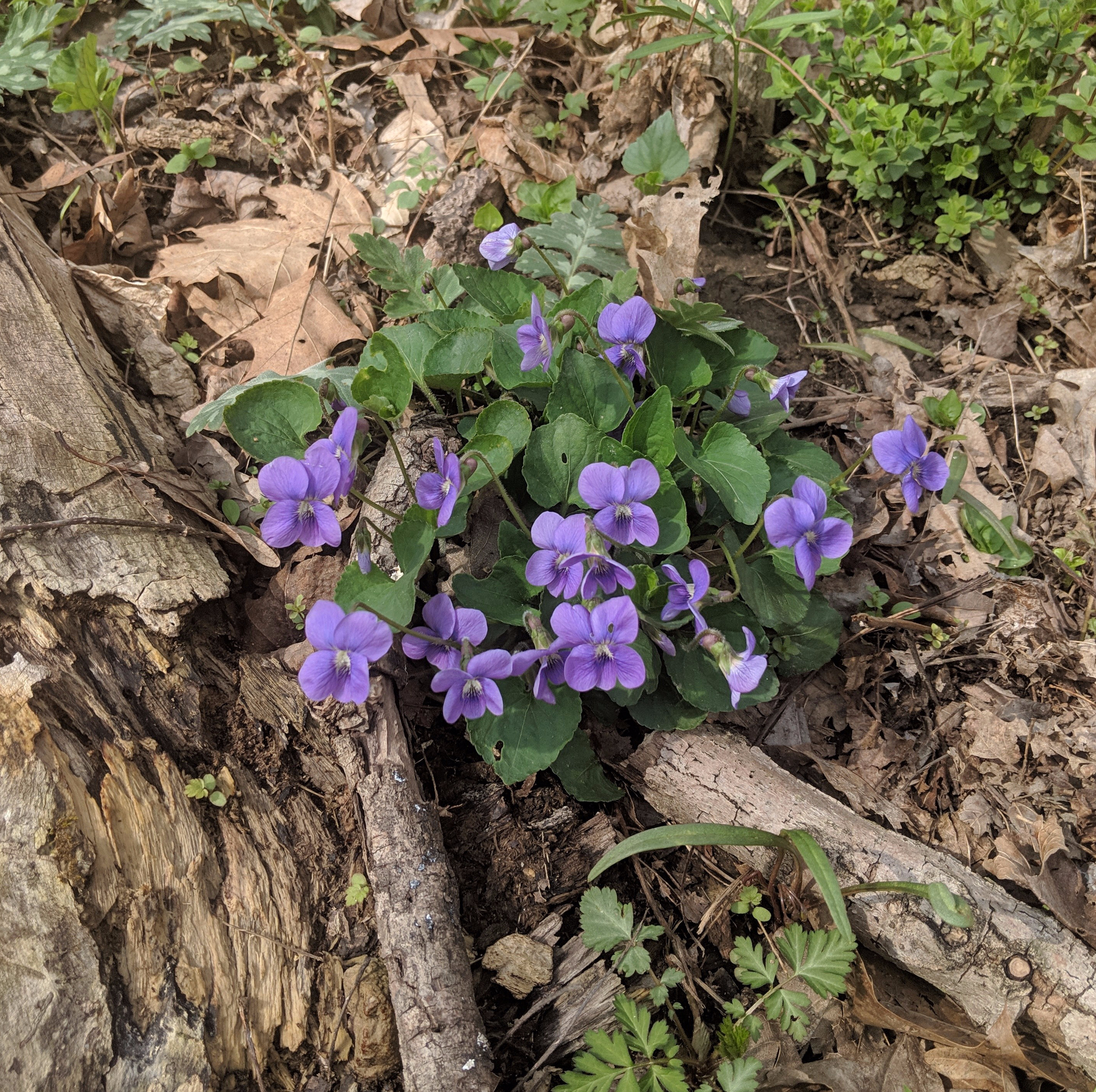
Blue Violets

They quietly poke their heads from beneath the leafmeal blanket to warm their faces in the light of the lengthening days. Without the fanfare of summer’s buds, it might be easy to overlook these humble harbingers of spring. Soft and muted, more leaf than blossom, many of them.

IMG_20200407_130459
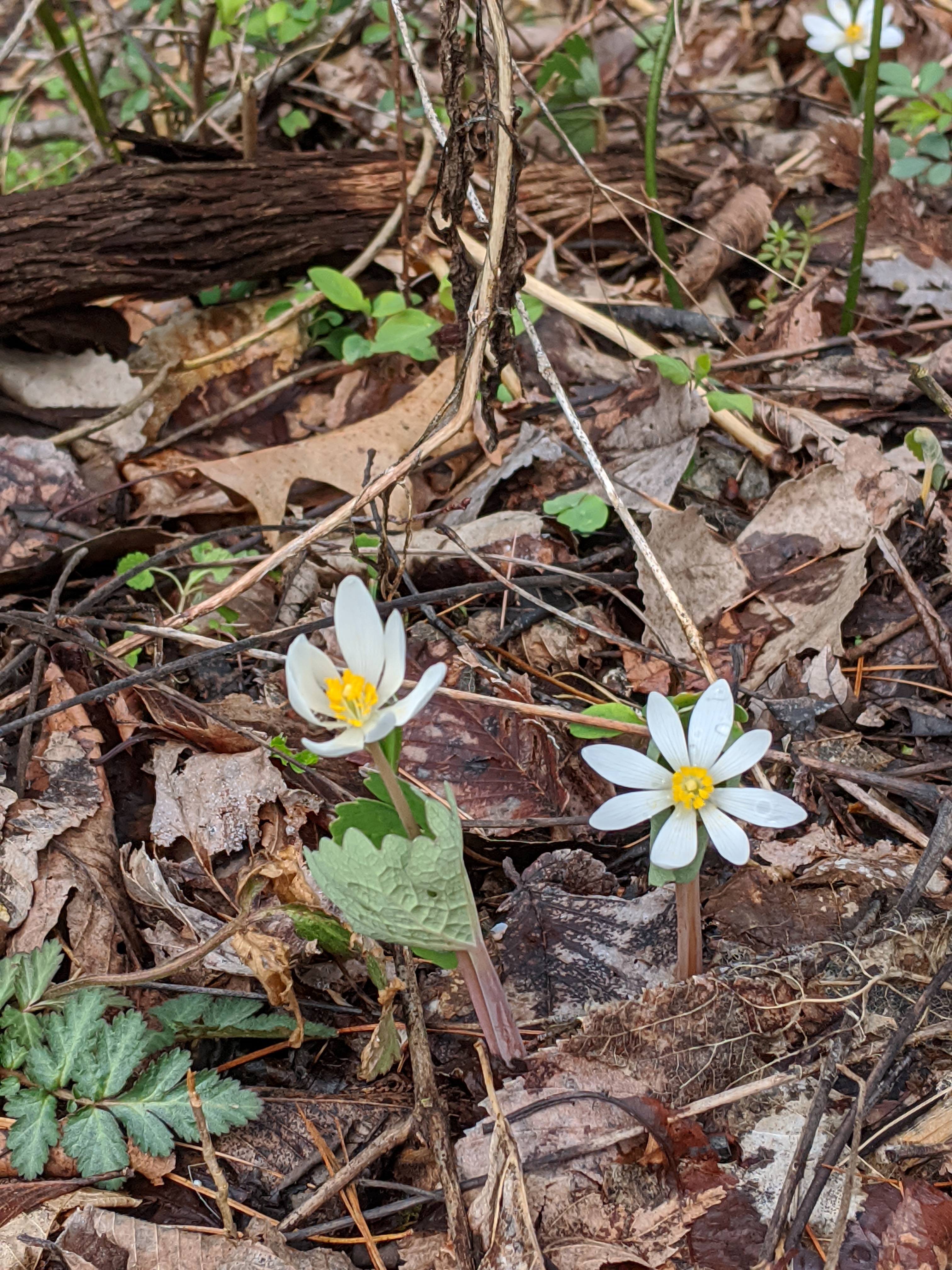
Bloodroot

It is a show of modesty with the violets and anemone, nothing flashy or extravagant like some of their hot-weather brethren:


Seeing the wildflowers amidst the fallen leaves and branches, bravely facing the chill of early spring, inspires a sense of hope and admiration. For something so small and delicate, they are surprisingly hardy.

img_20190417_121846.jpg
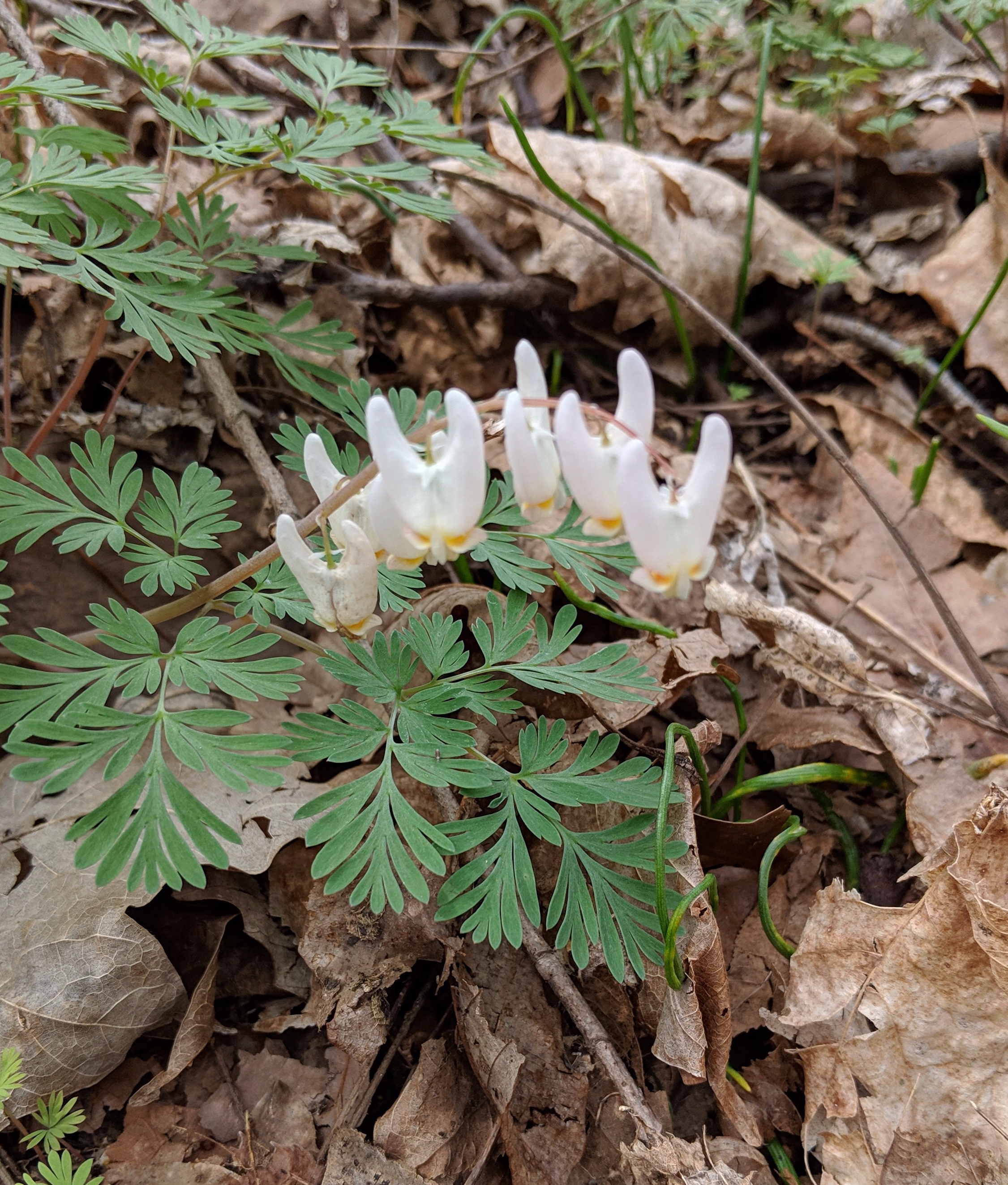
Dutchman’s Breeches

Spring is the best. It’s the light at the end of winter’s cold, dark tunnel. I know that the humidity and mosquitoes of summer will arrive all too soon, but for this window of time, all is fresh and gentle.

img_20190417_121901.jpg
Anemone

I feel calm and happy when I pass my wildflower friends on the trail. They offer a lesson in humility. Understated is underrated.

We exchange quiet smiles and tilt our faces back up toward the sun.