Explore

Bucket List Bookstores

You don’t have to spend much time on my blog to figure out that I really like books. I’ve had a love of reading since before I can remember, and it remains my favorite pastime to this day. That’s a good thing for sure, because in the midst of the present Coronavirus outbreak, books are one of the few escapes left to us.

Someday, hopefully soon, when the crisis has passed and we’ve closed our social distances, you’ll be more than ready to get out of the house and explore. As enjoyable as it is to curl up at home with a good book, it will feel great to venture out to observe them in the wild—at bookstores of course! Every bookstore has something to recommend it, but I’ve been to a few—both near and far—that warrant a special shout-out and would be worth a visit if you ever find yourself in their vicinity.

Book Loft

IMG_20200216_115346

The Book Loft is a gem in the heart of German Village, a historic little enclave on the southern end of downtown Columbus. The cobblestone streets of German Village frame the 32 cobbled-together rooms that house this independent bookstore’s bargain books. At different times over its 150-plus-year history, the building has been used as a general store, a saloon, and even a nickelodeon theater. 

Outside the store, the ivy-covered brick courtyard sets a cozy and welcoming atmosphere with benches, fountains, and twinkle lights. If you don’t linger here on your way in, then on your way out you might just want to find a little seat and begin reading your new books.

IMG_20200216_111408

Inside, get ready to get lost! There are maps available, but it’s much more fun to just wander and see where you end up. You may find yourself thinking that Daedelus had a hand in designing the store. It’s truly maze-like, room after room, full of twists and turns, dead-ends and switchbacks. Wasn’t I just in this room!?… At times I’ve doubted that I’d ever be able to find my way back out. (Somehow, I always do.)

IMG_20200216_114231

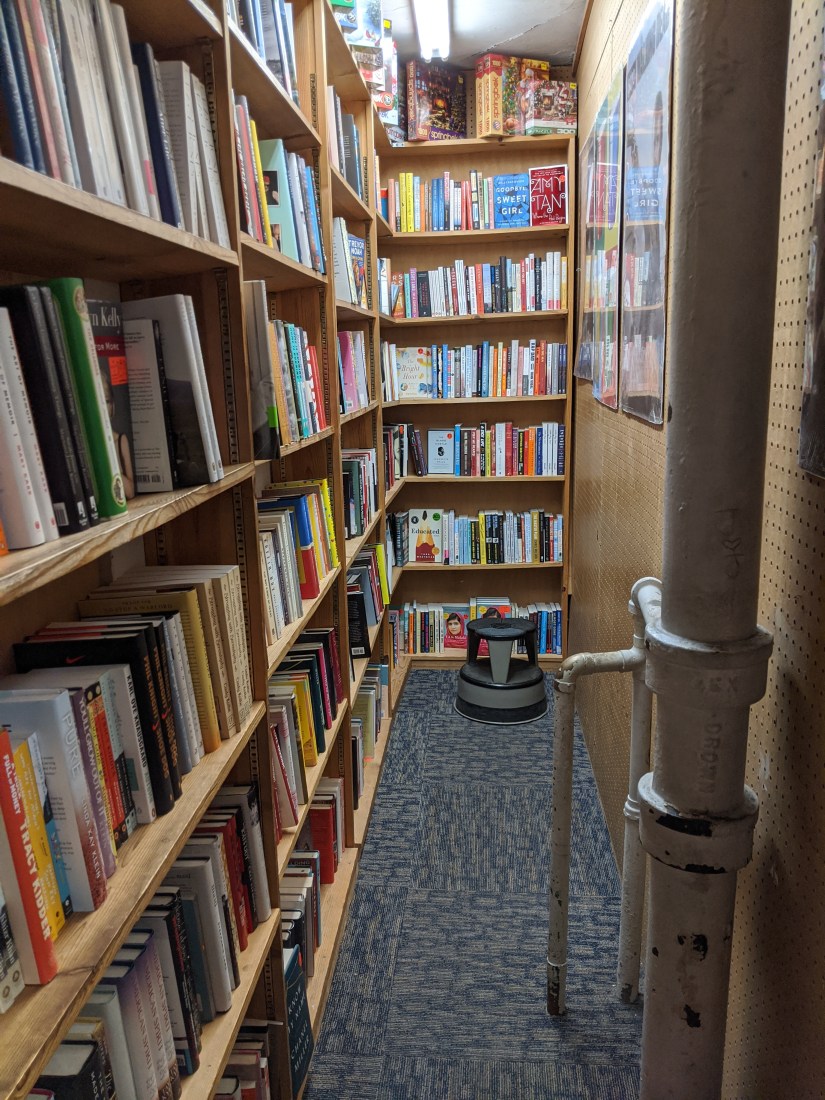
Once inside, you can go upstairs or down (eventually you’ll do both), browsing books that line long corridors and tiny nooks. No space is left unused. 
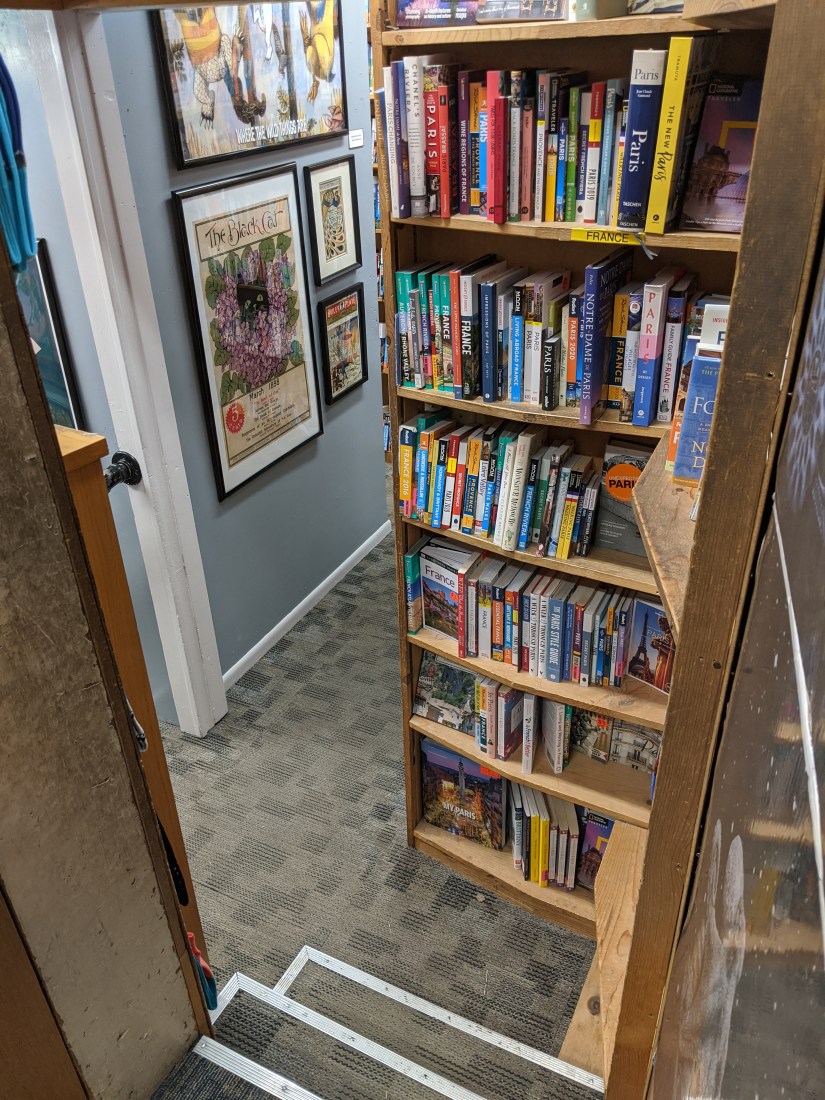
IMG_20200216_113351IMG_20200216_112552

In addition to books from every possible genre, the Book Loft also features its share of gear and swag, from postcards and posters to t-shirts and cuckoo clocks. I mean, we ARE in German Village, after all.
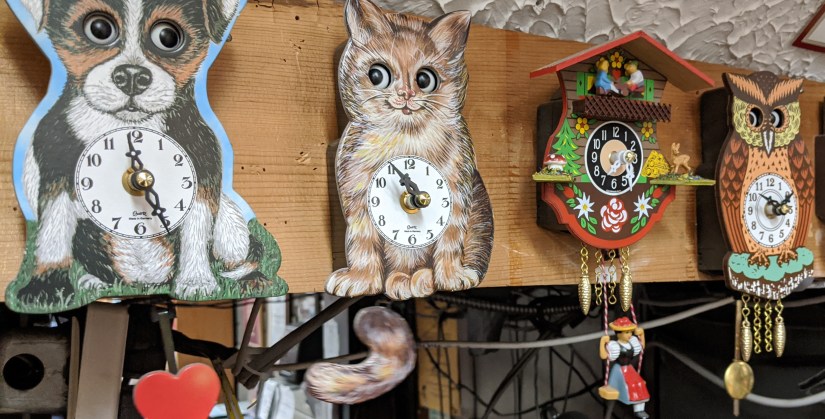
IMG_20200216_115138

The Book Loft is a store you could visit 100 times and never follow the same path twice. But the truth is, even if you did hit upon the same path, I doubt you’d ever know it. Whenever I need a place to lose myself for a couple of hours, it’s the perfect spot.

Parnassus Books

Ann Patchett is one of my favorite authors. The first book of hers I read (though it was her sixth novel) was State of Wonder, and it floored me. It is a brilliant, complex, and moving novel. A little mystery, a little anthropology, and plenty of real life human drama. I immediately set to reading everything else Ann had published to that point, and then each of her new books as she completes them. In my early days as a fan-girl I discovered that Ann is co-owner of an independent bookstore in Nashville, the city where she was raised. And then a few years back, my husband and I were vacationing in Tennessee, a loop that included Great Smoky Mountains National Park and Nashville. So of course, a pilgrimage to Parnassus Books was in order.

First, the name. Here’s the Parnassus backstory in their own words:

“In Greek mythology, Mount Parnassus was the home of literature, learning, and music. We are Nashville’s Parnassus, providing a refuge for Nashvillians of all ages who share in our love of the written word.”

A worthy goal indeed! From the exterior, you might not guess that it is such a special place. It’s a rather unassuming storefront alongside other shops in typical suburban-stripmall fashion.
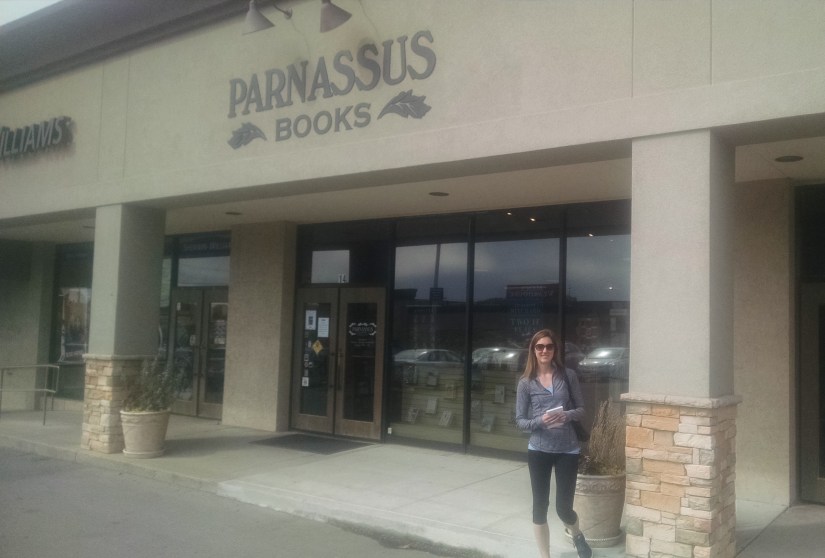
E5890BAA-75C2-4943-A557-EEDC0A72F279

Inside, though, Parnassus is cozy, inviting, and whimsical. I didn’t see Ann at the store that day; she was probably busy working on her next novel. But all of the store-keepers are friendly and extremely well-read. On the bookstore’s blog, the employees recommend titles from all genres, for all age groups. A good majority of my personal reading comes from the staff picks, because they are always so spot on!

If I lived in Nashville, I’d try to attend every author event hosted at the store. It would be tough, though, because they have events almost every day. They attract talented authors both novice and seasoned, with a special eye toward promoting local writers. (In fact, If I lived in Nashville, I would love to work at Parnassus. Ann?…) And then there are the shop dogs! These furry little ambassadors are welcoming, well-behaved, and surprisingly well-read. They chime in regularly on the blog with recommendations of their own.

Acqua Alta

Libreria Acqua Alta is in Venice, Italy. In some ways, Venice might seem like a bit of a cliche—the canals, the gondolas. But this is exactly what makes it such a fairytale place. A city built on water? What an unlikely and daunting endeavor. But holding back the relentless sea is an ongoing battle for the Venetians. Flooding is a constant concern, and in recent years Venice has suffered several particularly brutal episodes. The floods in November 2019 were the worst the city had seen in 53 years.
D4E2AE24-8C6E-4963-8942-10D7E7D69EE9

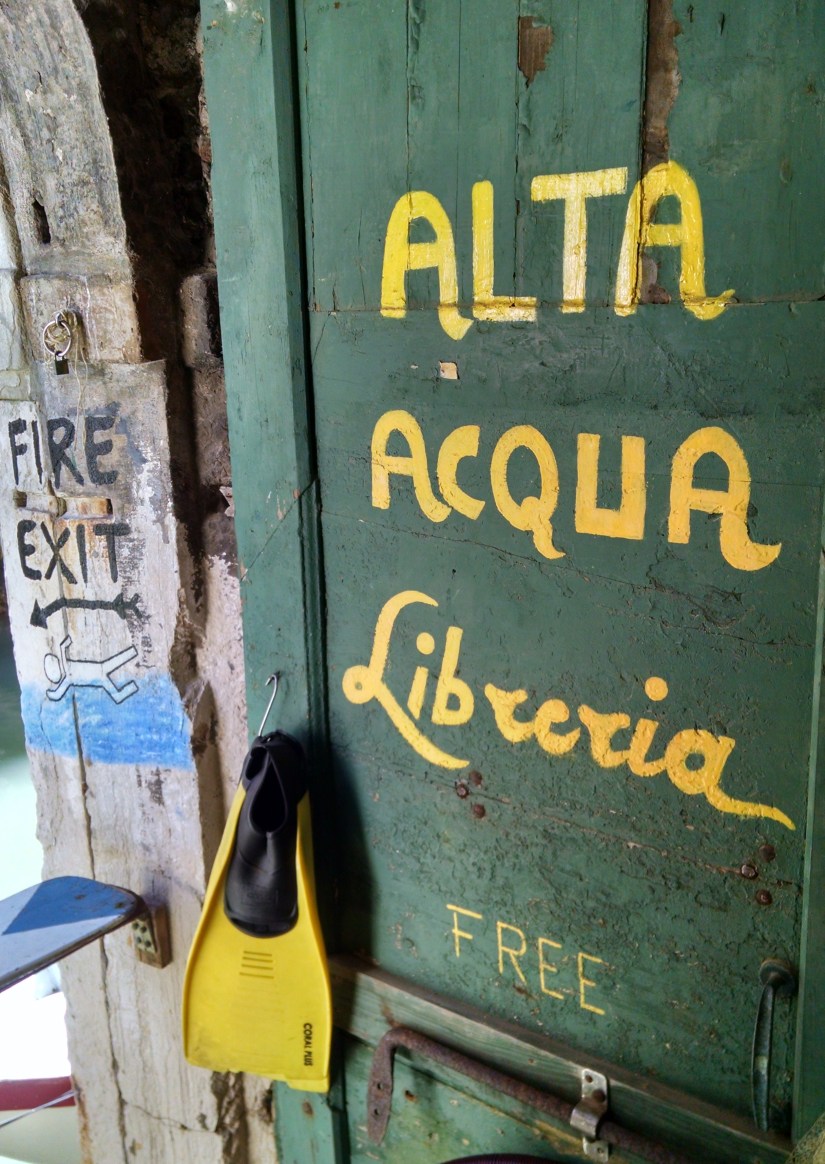
If you live in a city built on water, though, you find ways to adapt, as my husband and I discovered when we happened across Acqua Alta. We were exploring Venice—or rather, we were hopelessly lost, wandering the impossibly labyrinthine streets and bridges—and found ourselves standing before a most unusual bookstore. We’ve all heard the saying “If you can’t beat them, join them”—well, Acqua Alta (whose name translates to “high water”) takes that philosophy to a new level. 

Peering through the front entry, we could see that the store was crammed floor to ceiling with books. Not unusual, especially for a bargain bookseller. But what was out of the ordinary was the bathtubs, gondolas, and canoes being used to store and display the majority of the books. High water? Bring it on!

6A75D902-035C-4395-BAAF-561A297AB491
Not all of the books fit on the boats though. Some must make do by clinging to a door as they dangle in the icy water.

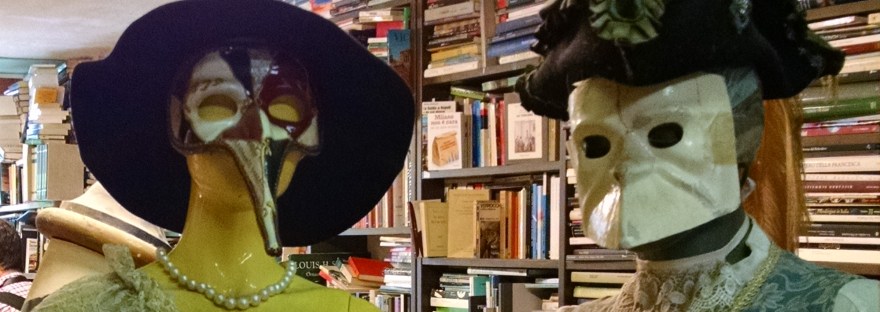
Book-lover though I am, I couldn’t tell you what kind of titles, genres, or languages Acqua Alta had to offer. I was completely distracted and enthralled by the whimsy and ambiance of the space. Costumed mannequins riding in a gondola. Shop cats perched gnomishly on shelves or swirling around my ankles. Everywhere I turned held something surprising or funny that had nothing to do with books. Except for in the little courtyard at the rear of the store….

Because despite Acqua Alta’s clever problem-solving, some of its books do occasionally become waterlogged. But even those volumes are put to good use, given new life as the building blocks of a staircase in the courtyard. Climb to the top for a “wonderful” view! (Of the adjacent canal. What else?)

44D172A5-F555-45EA-B27B-91578A7AE289

I know that some people today question the longevity of books. Won’t they become obsolete faced with the magic of digitization and e-readers? That would be a very sad state of affairs, but it’s one I don’t worry too much about. Nothing can replace the allure of a physical book. Every time I open the cover of a new book it’s like unwrapping a present. And reading a used or borrowed book adds a layer of anthropological adventure to the printed story. Hmm, what led her to dog-ear THIS page? Why is that passage underlined? Is that a coffee stain, or tea? E-readers can’t quite compare.

So in addition to all the books you’ve been wanting to read, now you have a few special bookstores to add to your bucket list. They’re definitely worth a visit. 

Do you have a favorite bookstore to contribute to the bucket list? If so, please feel free to tell us about it in the comments below!

Explore

Wrong Turns on the West Highland Way

If you can’t make a mistake, you can’t make anything.

Marva Collins, American educator, 1936-2016

My husband and I love to hike, so a couple of summers ago we took on the West Highland Way, a 95-mile-long trail in western Scotland. It runs from Milngavie (“MULL-guy”), a town just outside of Glasgow, to Fort William, the capital of the West Highlands. It is Scotland’s most popular long distance route, and its many adventurers complete it over varying lengths of time. Some power through and finish in a few days; others ramble at a more leisurely pace and take as long as two weeks. We divided the hike over eight days. It was our first adventure of this sort, a long-distance hike, and it turned out to be more rugged and difficult than we anticipated. This was both good and bad—we really enjoy physical challenges, but the difficulty threw us for a couple of loops along the way.

Screen-Shot-2015-03-03-at-14.27.05
The West Highland Way (Source)

As much as I enjoy hiking and being out in nature, I equally enjoy a hot shower and comfortable bed at the end of the day. Some hikers shoulder all of their belongings and camp each night along the Way, but we worked with a company that makes the endeavor a bit more humane. They arranged lodging at inns or bed-and-breakfasts in quaint hamlets and villages along the trail and shuttled our luggage each day from place to place. We had a map and hiked at our own pace; we just had to make sure we ended each day in the correct village. 

366FE32A-9D37-490B-AAC4-D8CB31E78E92
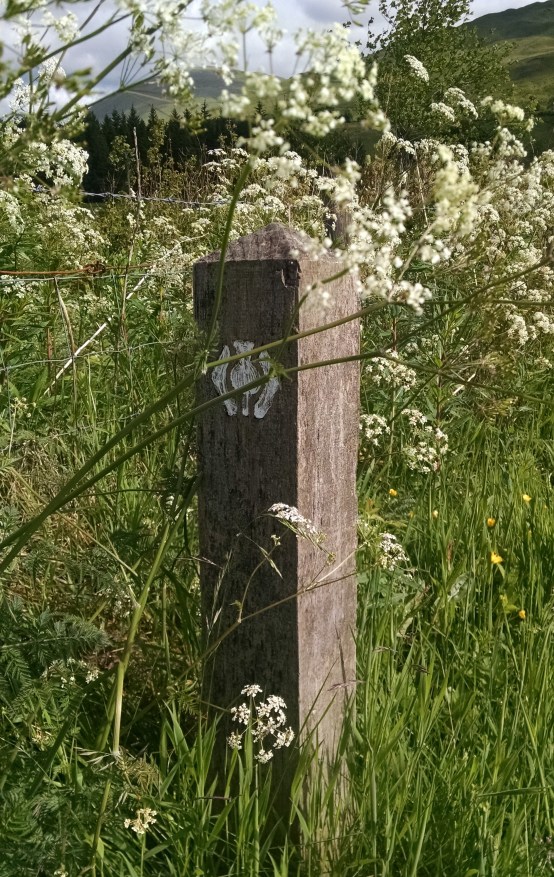
The trail was easy to follow, blazed with the Scottish thistle

It was ideal. . . . By day, we hiked along lakes and rivers, through old-growth forests and windswept moors. At night, we arrived at charming B&Bs, luggage awaiting us in our room, our hosts kindly inquiring how we would like our eggs in the morning.

There is no better way to experience the beauty and grandeur of a place than on foot. It forces you to go slowly. You can certainly cover more ground by car or train, but so much detail goes unnoticed. Walking, you are fully immersed in the sights, smells, and sounds of your surroundings. 

We loved exploring Scotland on foot and plan to undertake similar adventures in other countries. On the next hike, however, I will employ some accumulated wisdom I came by the hard way. The thing is, I love to research and plan trips. I thoroughly studied the ins and outs of a long-distance hike and knew what pitfalls to avoid. That being said, I fell hard into each and every pit. 

Day 1 of our hike was 12 miles; that was about the median length over each of our eight days. Some were longer, some were shorter. However, Day 1 was by far the most difficult day of the hike for me, for a number of reasons:

I didn’t eat and drink enough.

I didn’t dress warmly enough.

I didn’t pee often enough.

And my pack was too heavy.

Four cardinal sins of long-distance hiking, and I committed all four of them on the very first day.

The day started out easily enough. We chatted amiably with a few fellow hikers as we waited for the travel company’s van to arrive and make the first luggage pick up. We asked a sprightly old Scotsman to snap a photo for us, and were surprised to learn that he was planning to hike the West Highland Way as well.

“Aye, my sister wanted a wee adventure for her 70th birthday!” He gestured at a cluster of silver-haired folks standing across the courtyard. “It’s a loovely trail. Jest watch out for the midgies!” he gleefully advised before ambling over to join his group as they set off on their hike.

My husband and I exchanged a dubious look. In his bright blue plaid slacks, the old Scotsman was the least likely long-distance hiker imaginable. He wasn’t even carrying any supplies! And if his sister was 70, how old must he be?! Jesus. 

Off we went. The terrain was pretty tame at the outset. In fact it felt a bit as though we were hiking through a metro park until we got farther into the countryside. It was a perfect day for hiking—sunny and comfortable. We were making good time, stopping only for a PB&J picnic lunch and a few photo ops. 

The trouble started about two miles from our destination. I started to hit the wall. To be honest, I had never hiked 12 miles in one go before. I love to walk and hike, but a typical hike is more like three to five miles. I didn’t have a good frame of reference for what 12 miles would feel like. 

When I started to hit the wall, I should have stopped for a break to have something to eat and drink. But I was so tired; it felt like too much trouble to dig down into my pack for a Clif bar. We were almost there, right?

Also, I kinda had to pee. But what a hassle. We were almost there. Two miles? I could hold it. 

Until it became a bit harder to hold. But by then, there were no good places to slip off the trail and take care of business. I had squandered all of my opportunities. Guess I’d have to hold it.

And then it started to rain. We were in Scotland, after all. But no worries, I was well prepared with my waterproof jacket and pants. Only . . . I was so tired . . . and I had to pee . . . and I just wanted to get there. Stopping to dig out my rain pants and put them on felt like too much trouble, seeing as we were almost there. Besides, it wasn’t raining hard at all. I’d just tough it out. 

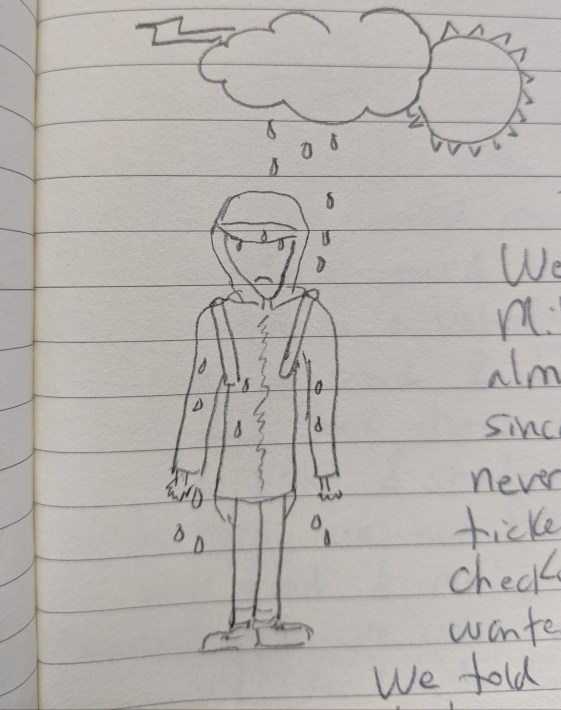
You can guess what happened next. The light rain escalated into a steady rain. The steady rain burst into a torrent, a transition signaled by a single giant thunderclap. Were we hiking, or were we on the deck of a doomed crab boat? We were so soaked, so fast, that rain gear no longer mattered.

IMG_20191103_105944

By the time we reached our village, I was numb. We straggled into town like a pair of nautical birds returning from a misadventure at sea. I was wet, cold, hungry, and did I mention that I had to pee?? My husband asked through the driving rain, “Where do you want to stop in to warm up?” I think my lips moved, but nothing came out. Ahead there was a small cafe; mutely, we agreed upon it as our destination and trudged grimly forward. As we got closer, I saw someone standing outside the cafe beneath an awning. Wait a minute. Bright blue plaid slacks. . . . It was the hale old Scotsman! How could he have beaten us here? Yet there he stood, as dry as a bone, puffing thoughtfully on his briar pipe. Which he raised to us in a jaunty salute as we shuffled into the cafe.

So Day 1 was not my best day. In fact, at our B&B that evening, I began to question the entire undertaking. Why are we doing this? Is this supposed to be fun? What are we trying to prove? The whole thing seemed like a giant boondoggle. We decided to sleep on it and see how we felt in the morning.

Wouldn’t you know, everything looks better after a good night’s sleep and a proper Scottish fry-up.

IMG_20191226_122847
Anatomy of a Scottish fry-up

With a renewed dedication to making the most of the experience, we made some adjustments and set off on the day’s hike. I learned little things every day that made the hiking easier and more comfortable.

I learned to eat and drink at regular intervals . . . and to keep an Emergency Clif Bar in the front pocket of my jacket for easy access.

I learned to respond quickly in regulating my temperature. It takes me a long time to warm up, but when I do, I go from comfortable to sweltering in an instant. Even when it seemed like a “hassle,” I stopped to adjust my layers of clothing, to keep as comfortable as possible. These adjustments included my rain gear as well. The rain (and it rained nearly every day of our hike) was a non-issue as long as I had my rain gear on. (Plus, rain kept the midges away. Oh, the midges. These tiny biting insects are relentless. Even slathered in Avon’s oily, cloying “Skin So Soft,” touted as the only effective deterrent for the little buggers, I still incurred my share of bites.)

I learned to pee before it became a dire need. If I kinda had to go, then I would go as soon as we saw an opportune place to stop. There are no merit badges on the trail for “holding” it the longest.

I learned to carry the bare minimum in my backpack. The funny thing was, on Day 1 I thought I was traveling light! I mean, our real luggage was shuttled from one B&B to the next. I only had to carry my supplies for that day’s hike. But I realized that I had included too many “just in case” items that I could live without, and did I really need to carry the entire loaf of bread and jar of peanut butter so that we could make our sandwiches at point of use? After Day 1, I shaved every possible ounce from my day pack, and it made a world of difference. A backpack that feels okay during Mile 1 can feel totally different by Mile 12.

Despite my many mistakes, there was one thing I did get right: my Darn Tough wool socks. When I started researching footwear, it seemed counterintuitive that wool socks would be the best choice. I equated wool with heavy itchy sweaters. But wool has some superpowers that make it the ideal hiking companion: It is moisture-wicking and dries quickly, and it is naturally antimicrobial so it combats stink. Between my well-fitting hiking shoes and Darn Tough socks, I accumulated exactly ZERO blisters along our 95-mile hike. Darn Tough offers a lifetime warranty on their socks (you can mail back a spent or damaged pair any time and they’ll send you a voucher for a replacement!), and I have since upgraded my entire sock collection to feature nothing but Darn Tough socks in varying ankle heights.

Here they are. Minus the pair that is currently on my feet, of course.

(Okay. If I haven’t convinced you to try them yet, here is a link to get $5 off your first pair of Darn Tough socks. It also puts $5 in my rewards account, but to be honest, I haven’t ordered new socks in years since I just send back my old ones for replacements! I really just want you to try them. You’ll love them!)

Exploring Scotland via the West Highland Way was a perfect introduction to the beauty and hospitality of the country. Additional Scottish trails like the Great Glen Way are high on our list of future travels. If you enjoy nature, adventure, and physical activity, a long-distance hike could be just the ticket. Each day held challenges, but after righting the wrong turns from Day 1, there was nothing we couldn’t handle!

Explore

Mission: Channel Islands

I was maybe eight years old when I first read Scott O’Dell’s Island of the Blue Dolphins. It’s a captivating story about a teenage girl who survives alone on an island for nearly two decades. She has no choice but to become entirely self-sufficient, building her own shelter, hunting her own food, fashioning her own clothing, her only companion a wild dog she manages to tame. Part of the allure for me was that it was a survival story about a girl. Most books like this tend to feature boys (Gary Paulsen’s novels, like Hatchet and The River, come to mind), so O’Dell’s story was invigorating and inspiring. Possibilities swirled through my suburban brain. Could I coax a squirrel to eat out of my hand? Could I collect enough bird feathers in our yard to make a dress like Karana’s?

220px-Blue_dolphins
First edition book jacket, 1960 (Source)

The most amazing part is that O’Dell’s book is based on a true story. Though there are many more questions than answers about the mysterious Native American woman, we do know that she lived alone on the island of San Nicolas—a windswept and remote member of California’s eight Channel Islands.

Californian_Channel_Islands_map_en
Map of the Channel Islands (Source)

Few facts about her can be verified for certain, but it is believed that she belonged to the Nicoleño people living on the island. However, when the last remaining members of her tribe—most of whom had already been killed in conflicts with seal hunters—were rounded up and shuttled to the mainland in 1835 by the Franciscan friars eager for cheap labor and Christian converts, she was left behind. Several accounts say that she was searching for her son, who was missing from the boat. Subsequent ships sent to the island to search for her were unsuccessful. The story of the “Lone Woman of San Nicolas” became something of a legend on the mainland. But 18 years later, in 1853, Captain George Nidever, a local sailor and hunter, decided to try his hand at finding her. On his third attempt, he located and followed a trail of footprints on the island that led him to the lost woman. She welcomed the captain and his men as guests, and they spent a couple of weeks on the island with the woman, hunting and learning about her way of life as best they could through the language of signs and gestures.

Juana_Maria_Inset
Photo of the woman believed to be Juana Maria (Source)

When they returned to the mainland she came with them (willingly) and was taken to the mission at Santa Barbara. At this point you might be thinking, “Aw, a happy ending!” Well … not so fast.

First, nobody there could communicate with her. She spoke a language unrecognizable to them or to the native peoples residing at other nearby missions. The missionaries christened her “Juana Maria,” and she reputedly was cheerful and good-natured, seeming to be happy in her new home. Secondly, as was the fate for so many natives, she died of disease just weeks after her arrival at the mission.

Figures. After surviving on her own for 18 years on a deserted island! A small plaque honoring Juana Maria adorns the wall of a courtyard at the mission today.

img_20180610_130712.jpg

So last summer, an interesting trip came about: My husband and I, along with my parents, met up with my sister and her family in San Diego. We then road-tripped up to Santa Barbara to see the mission, and … to visit Channel Islands National Park, and thus check off one more location on my bucket-list quest to explore all of the U.S. National Parks.

Of the eight islands in the group, only five are part of the park system and open to visitors—the island of San Nicolas is not one of them. So although I couldn’t see the island where “Juana Maria” actually lived, I got about as close as possible and used my imagination to complete the picture.

Channel Islands National Park is one of the lesser-visited in the park system, and it is not hard to see why. It takes a bit of effort to get there. It’s not the kind of place where you easily pop in for a day hike, or book a relaxing weekend at the lodge (there isn’t one). There’s no comfy “driving tour” with convenient pull-offs for your photo ops. If I say “Pacific island” and you picture Tahiti, well, might need to recalibrate your expectations. However, for those intrepid explorers willing and able to go for it, a visit to the islands is an adventure you won’t soon forget. Its remoteness and ruggedness are part of what makes the place so spectacular. So channel your inner Juana Maria and prepare for some memorable experiences!

1. The Ferry Ride

The island we visited, Santa Cruz, is the largest and nearest to the mainland, but even so it requires an hour-long ferry ride to get there. I’ve been on ferries a couple of times, but never a ride as long or, frankly, as rough as this one! It wasn’t exactly a sight-seeing pleasure cruise … though we did see some delightful sights, like sea lions clustered on a buoy enjoying the sun, and dolphins bouncing along outside of our wake. And after an hour at sea, with no land in sight, it gave me chills when our island finally emerged out of the haze, remote and mysterious. I couldn’t stop thinking about Juana Maria, her solitary existence on an island like this one…. Did she walk along the cliffs, gazing out toward the horizon, waiting for a ship to appear?

My eagerness to arrive at the island was twofold. Because as we zipped across the water, bumping over the waves, my fellow passengers began to lose the battle with seasickness. One after another they staggered to the rails, their retching masked for the most part (thankfully) by the wind and waves. It made me start to feel queasy, but I couldn’t tell if I was actually starting to feel a little seasick or if it was just the power of suggestion. Nobody in my party succumbed, perhaps because by chance, we’d chosen seats in the part of the boat that was the calmest. A stroke of luck! Or was it?… (Guess where all the seasick passengers were instructed to convalesce?) Let’s just say I was good and ready to disembark by the time we reached the island. As a little extra insurance, we made sure to stop by the island canteen to pick up some dramamine tablets to pop before the return trip.

(Hmm. Maybe I shouldn’t have led with that story…. Don’t let it deter you from visiting the islands! Really, it’s worth the trip. I promise. Just take some dramamine. And maybe ride in the open cabin on the top of the boat. That’s what we did on the return trip, and the fresh air was fantastic.)

2. Island Foxes 

960-IMG_3236_2-2
Island fox (Source)

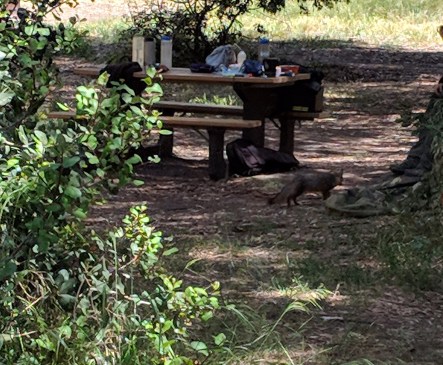
One inhabitant of Santa Cruz is the island fox, and these critters are bold! Reading about them in our guidebook before our visit, we crooned, “Oh, I hope we get to see one of them!” In fact, it would have been hard not to see one. Unlike its nocturnal mainland brethren the gray fox, the island fox has no natural predators and therefore is active at all times of day … especially during visitors’ lunchtime picnics. They were practically tame, sidling up to our tables, trying to elbow their way in for a bite of sandwich.

Maker:S,Date:2017-11-7,Ver:6,Lens:Kan03,Act:Lar02,E-Y
“Mmm, what’s for lunch?”

Sort of like the Galápagos tortoise or Madagascar’s ring-tailed lemur, the island fox lives only on the Channel Islands. In addition, the subspecies on each island is actually unique—so the island foxes we met on Santa Cruz are not exactly like the foxes on any of the other islands. They are adorable creatures and have the most expressive and inquisitive little faces. Just be prepared—they are persistent to a fault … and in addition to being about the size of the typical housecat, they are similarly disinclined to following orders from humans.

IMG_20190330_192335

3. Surf or Turf

Visitors to Santa Cruz can explore the natural wonders by land or sea. Hiking trails of varying difficulty circle and bisect the island, and there is a kayak and snorkel outfitter from the Scorpion Anchorage area. As we were day visitors to the island (some people stay and camp), we had a limited amount of time to explore and decided to focus on hiking. We hiked the Cavern Point Loop Trail and a portion of Smuggler’s Road, peaceful forays that cut through fields of wildflowers and hugged the clifftops, offering expansive vistas of the bright blue sea.

180611DSCF9395

Being a Mediterranean-type climate, there aren’t many shady trails, but the constant ocean breeze combined with the sun to make our hikes quite comfortable.

180611DSCF9422

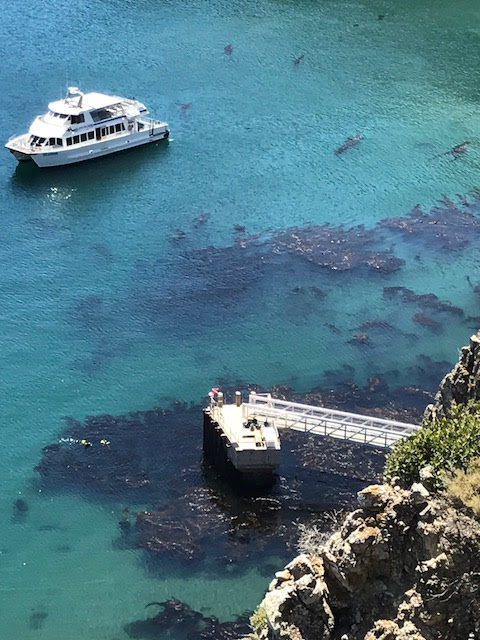
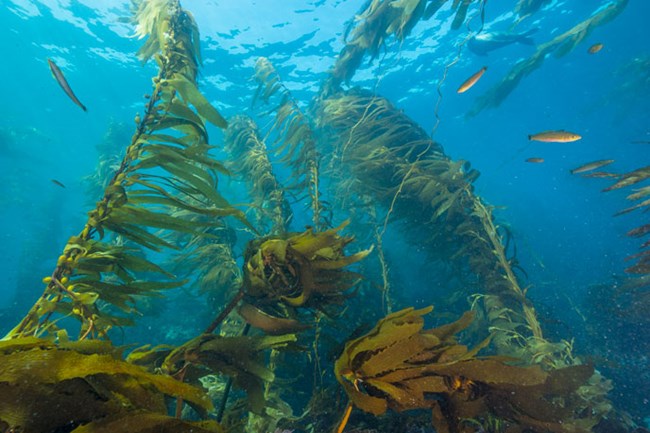
Given more time on Santa Cruz, visitors should definitely explore it by sea as well. Guided kayaking trips navigate the sea caves around the shoreline, affording a unique perspective on the island’s flora and fauna. There is even more to see below the surface, if you can brave the chilly Pacific waters. Snorkelers and scuba divers can explore the magical kelp forests in the crystal clear water, which we looked down into from the cliffs high above.

IMG_0880

At its warmest, in September, the water is only around 60 degrees! We did at least wade out into the ocean, carefully picking our way across the rocky, pebbled beach. It was frigid. Being fully submerged in the water to dive would certainly be … invigorating!

CHIS-DUW-141029-081_688px_1-2
The kelp forests (Source)

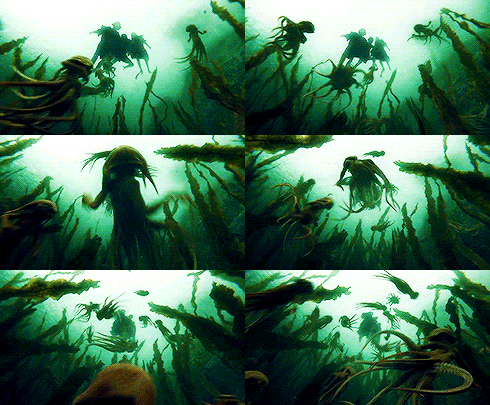
And since we hadn’t packed our Gillyweed…. Aquatic exploration will have to wait for the next visit.

tumblr_mui3jsl5oQ1roxf86o2_r2_250
Harry Potter in the Triwizard Tournament, anyone?? (Source)

All in all, our California adventures were an unforgettable combination of fact and fiction, sea and sand. I’m not sure I could survive alone for 18 years on a deserted island, but next time, maybe I’ll at least give the overnight camping a try.

For Further Exploration

The National Park Service has a section about the Lone Woman of San Nicolas, featuring connections to O’Dell’s novel, information about the history and culture of the native peoples, and updates about archaeological discoveries on the islands.

“Stranded on the Island of the Blue Dolphins: The True Story of Juana Maria” is a detailed article from JSTOR that tells as much of the story as it is possible to know.

Island of the Blue Dolphins and Zia (a sequel) by Scott O’Dell

For more information about visiting Channel Islands National Park, the National Park Service website has you covered.