Read

Play by the “New Rules”

It’s that time of year when people start thinking about resolutions. New Year’s resolutions often include fitness and nutrition goals, which got me thinking about a conversation I had with a friend recently about exercise and fitness. We both really enjoy working out, so I told her about a book I’d read that changed the way I lift weights. 

“In fact,” I told her, “it changed my life.” 

We looked at each other in surprise. I hadn’t been expecting to say that, but I realized at that moment that it was true. 

I never received much coaching in lifting weights. And I’m a lifelong athlete! Things probably are a bit different today, but 20 years ago when I was in high school and in college, female athletes spent very little time in the weight room. Looking back, I can see the lack of focus and guidance. It’s like our coaches knew we probably “should” lift weights, but they weren’t that into it and weren’t real experts at it. 

As an adult, I continued to work out. I ran (outdoors and on the treadmill) and I carried on with my version of weightlifting. The version many women practice:

  • High reps (to “tone” muscles)
  • Low weights (I didn’t want to “bulk up”!)
  • Mostly machines (less intimidating than the free weight area)

BUT THEN.

I read The New Rules of Lifting for Women by Lou Schuler, Cassandra Forsythe, and Alwyn Cosgrove, and their book completely transformed the way I work out.

I learned new exercises. My workouts took on a different structure and concrete goals. But the number one thing I gained was the confidence to lift heavy weights.

A bit about the authors:

Lou Schuler is a certified strength and conditioning specialist, as well as an award-winning journalist and author. Alwyn Cosgrove is a strength and fitness coach and consultant, who owns the well-respected Results Fitness gym in California. Alwyn designed the New Rules workout programs. Cassandra Forsythe holds a PhD in kinesiology, an MS in nutrition, and is also a registered dietician and certified strength and conditioning specialist. She created the nutrition plan for the book. 

Throughout the book, they set out 21 “new rules” for women related to strength training and nutrition. One of the biggest myths—busted right off the bat—is that if women lift heavy weights, they are going to turn into

 It’s not going to happen. 

Lou wryly points out that for most men (himself included) there is no such thing as muscles that are “too big.” Even after decades in the weight room, with all the hormonal advantages of being biologically male, if a dude has big muscles he has worked REALLY hard for them. 

Truth be told, okay, yes, I was always a little afraid of becoming “bulky” and mannish. But Lou assures us that “unless you’re an extreme genetic outlier,” women do not need to worry about becoming bulky. 

The first four rules were among the most mind-shifting for me:

New Rule #1: The purpose of lifting weights is to build muscle
New Rule #2: Muscle is hard to build
New Rule #3: Results come from hard work
New Rule #4: Hard work includes lifting heavier weights

It dawned on me that for years I had been treading water. I’d been on autopilot, moving through the same series of exercises, using the same number of reps and weights each time. I stayed in decent shape, but I never got any stronger. 

Good spot for a disclaimer? I am not a personal trainer or exercise scientist. What I am is a woman who cares a lot about fitness, wellness, and functional strength that will serve me well for a lifetime. The New Rules philosophy has helped me to maximize my efforts and achieve goals I never imagined were possible. 

The workouts center on compound moves that involve multiple, coordinating muscle groups and mimic movements that one performs in real life. In real life, we don’t often bend and straighten our elbows in isolation (à la bicep curl or tricep kickback). But we do lift, push, pull, and carry things, sometimes heavy things. The biceps and triceps are designed to work in concert with the larger muscles of our upper torsos as we carry out those functions. 

So in the New Rules program, you will not see time devoted to small-muscle moves like tricep extensions. If you’re a bodybuilder training for Ms. Olympia, sure, you might need your triceps to ripple like a flag, but for the rest of us, our time is better spent on compound moves that work multiple muscle groups simultaneously. 

Moves like a chest press (which works your chest, shoulders, and triceps simultaneously).

Or a chin-up (which develops your upper back, shoulders, and biceps simultaneously). 

Or my favorite move of all: the deadlift, which works damn near every muscle in your body!
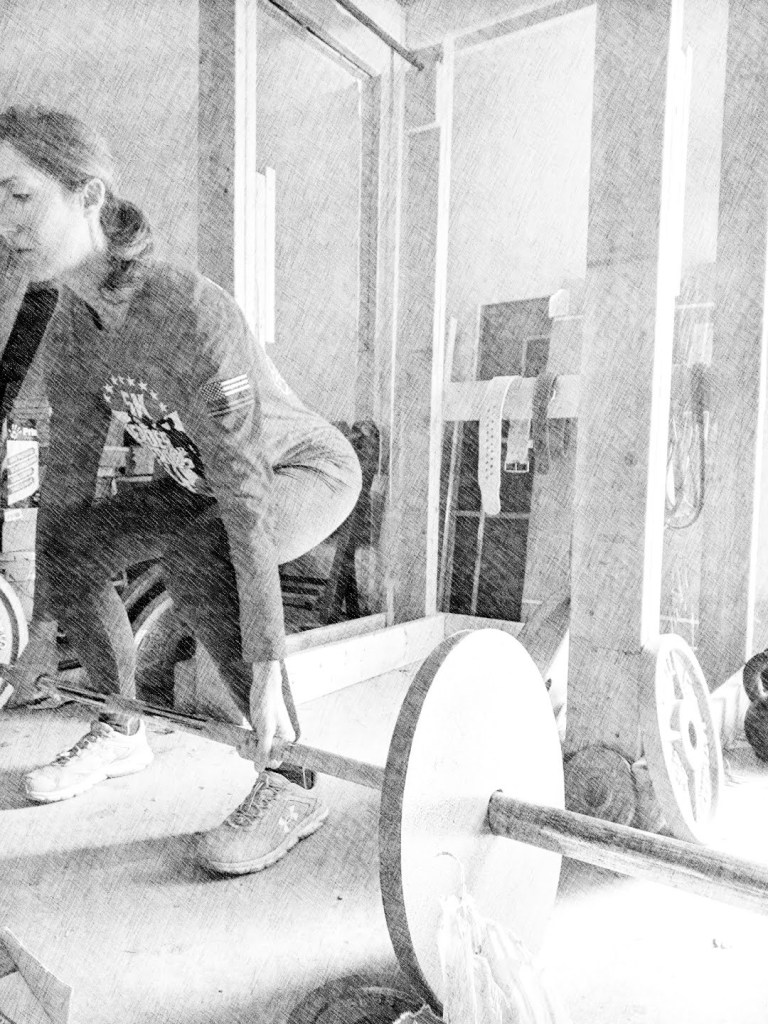
Increasing your muscle mass yields multiple benefits. Muscle is more metabolically active than fat, so even at rest, a muscular body will burn more calories than a doughy one of the same weight. Even more important though is the correlation between strength and longevity. All else equal, a person with more muscle mass has a decrease in all-cause mortality over same-age peers. The reasons for this are many, but the solution is (kind of) simple: Build your muscles! Do resistance training!

Nutrition is an essential component of the program, and four chapters, or six of the 21 “new rules,” outline how to properly nourish a strong body. 

Lou’s writing is friendly, factual, and funny. He and Alwyn have collaborated on four other New Rules books, as well as a fifth book titled Strong. I’ve gleaned useful information from all of them, though the second one is the one that really changed my life. The series includes:

The New Rules of Lifting
The New Rules of Lifting for Women
The New Rules of Lifting for Abs
The New Rules of Lifting for Life
The New Rules of Lifting Supercharged

……………………………………………………………………………………………………………….

Sometimes I think to myself, This is crazy, I’m stronger now than I’ve ever been in my life! But I know that probably is not really true. It seems unlikely that my mid-40s body is actually stronger than the 20-something body of a college athlete. But what IS true is that my 20-something self didn’t KNOW how strong she was, or could be. And my 40-something self knows better than to set limits on what is possible. 

Read

It’s a Long Story: Magic, Mystery, and a Pint of Doom Bar

It’s been more than 20 years now since Harry Potter became a household name. His author, J.K. Rowling (which, let’s just settle this once and for all, rhymes with “bowling”), not far behind. If you’ve never read the series, it’s not too late—the books attract readers of all ages; multi-generational fanclubs abound. I had a fun chat with one of my nephews recently, who is reading the series for the first time. We compared notes on our favorite book (Goblet of Fire hands down) and lamented the fact that we both have sisters who have been sorted into Slytherin:

“Or perhaps in Slytherin
You’ll make your real friends
Those cunning folk use any means
To achieve their ends.”
—from the Sorting Hat’s song, Harry Potter and the Philosopher’s Stone

(Yeah. But Slytherins have good qualities too, right?. . . . They’re, um, resourceful? You might like to take the test yourself and find out which House you belong to. It’s uncannily accurate.) 

I had never been big into the fantasy genre before Harry Potter, but it was definitely a gateway into other enjoyable series such as Inkheart and Eragon

It was a bittersweet day when I turned the last page on the last book in the Harry Potter saga. 

Years passed.

And then I met Cormoran Strike, the burly, foul-mouthed, beer-swilling detective created by Robert Galbraith. Pseudonym of none other than . . . J.K. Rowling.

I had never been big into detective novels before Cormoran Strike . . . (are you sensing a theme here?).

It’s hard not to like Cormoran Strike. Although he wouldn’t really give a crap whether you liked him or not. When we first meet Strike, his life is on a definite downward spiral. He’s a veteran of the Special Investigation Branch of the British military, missing half of his right leg after an explosion in Afghanistan; he just broke off (again, and probably for good) from his tempestuous lover; and he’s drowning in bills that his trickle of detective clients does little to offset. But don’t go feeling sorry for him; he certainly doesn’t feel sorry for himself. (And pity infuriates him anyway.) Strike is stubborn as hell, and just as smart. He can be gruff and unapologetic, but then surprise you with his compassion. He is protective and loyal to those who have earned his trust, a short list that comes to include Robin Ellacott, the most unlikely partner Strike ever would have imagined.

Robin shows up for work at Strike’s office, sent by a temp agency to fill a receptionist spot that Strike had forgotten to cancel—and can little afford to pay. Although the beautiful, clean-cut Robin is Strike’s foil in nearly every way, she turns out to be his equal when it comes to resourcefulness, stubbornness, and integrity. Working as a receptionist is far from Robin’s dream job, but being involved in detective work . . . well, that is a lifelong dream of hers. Before long, she has somehow made herself indispensable to the agency. When Strike is hired to investigate the high profile death (murder?) of a glamorous young starlet, things get very interesting.

The first novel in the series

I don’t want to say too much about the plots. It will be much more fun for the stories to unfold as you read them. Personally, I like to go into a new book pretty much cold so that I can be surprised and delighted by the twists and turns. And there are plenty of those in the Strike novels.

Speaking of surprise and delight. . . . Strike regularly enjoys a nice pint (or two, or four), and one that he orders up throughout the first novel is a brew called Doom Bar. I had never heard of it and didn’t imagine it was a real thing. But it is a real thing, at least in the UK, because when my husband and I visited Scotland a few years back, Doom Bar was on draft at the first pub we visited! Well I had to raise a pint to Strike, didn’t I? I expected it to be a dark and heavy stout, like the man himself, but it was a lovely amber ale. Delicious.

Here’s the pub! I’m waiting excitedly as my husband orders the Doom Bar.
And then I was so distracted I neglected to take a photo. Amateur hour.
Cheers!

There are seven novels in the series so far: The Cuckoo’s Calling, The Silkworm, Career of Evil, Lethal White, Troubled Blood, The Ink Black Heart, and The Running Grave. Several of these have been adapted for television (the show is called “C.B. Strike”) and are available on various premium platforms.

There is a lot to love about J.K. Rowling’s work. She is a master at bringing a person to life using the written word. I’m consistently awed at her imagination and skill to so perfectly capture a character’s thoughts, motivations, mannerisms, and speech.

But maybe the best thing about Rowling’s books is that they are so long! Her novels are the type that you want to race through because they’re so engaging, but that you try to read slowly because you want to make them last. I’m always grateful that I have hundreds of pages over which to fight this battle. (The Running Grave is almost 1,000 pages!)

So if you’re on the hunt for some heavy light reading, raise your glass of Doom Bar (or butterbeer, Potter fans!) to J.K. Rowling. Between Harry Potter and Cormoran Strike, she certainly has you covered.

Read

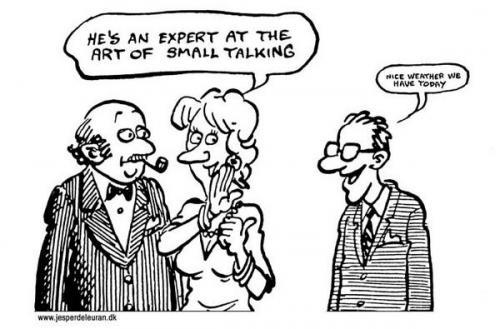
Rethinking Small Talk

I wouldn’t call myself socially awkward, although I am a textbook introvert. While I do need and enjoy interactions with people, being around a lot of people for a lot of time requires a lot of energy from me. So it has always been easy for me to bemoan and disdain small talk. But let’s be honest, who doesn’t hate small talk? I’ve known exactly one person in my life who claimed to enjoy small talk. And he really probably did.

But for the rest of us? It’s a chore! We do it when we have to, and some of us navigate it pretty admirably, but at best we just endure it. I don’t totally suck at small talk, but I’ve often found myself feeling some anxiety before social occasions, dreading the upcoming small talk. What if I can’t think of something to talk about? What if there is an awkward silence? What if I seem boring or unfriendly?

I wondered if there might be a way to improve at small talk rather than live in perpetual dread.

Nerd alert: I googled “how to make small talk!” and “killer conversation starters!” And you know what? There is a lot of information out there. Apparently I’m not the only one who struggles with small talk. This was reassuring in and of itself, but what really bolstered my spirit was the knowledge that making small talk is a skill. There are strategies you can study and practice to improve at it. 

Well then. I’m a teacher! Learning and studying are right up my alley.

I kept reading, and when I checked out Debra Fine’s book The Fine Art of Small Talk, it got me looking at this social nicety in a whole new light.

First of all, small talk really does serve a purpose. It breaks the ice, builds rapport, and allows you to progress to deeper conversation. Some people scoff that we should just do away with small talk and dive right into the good stuff. But that would be like trying to jump onto a treadmill already whirring along at 10 mph rather than gradually dialing up the speed as your muscles get warm. You don’t have to stay in small-talk mode forever, but it’s probably wise to ease into deeper conversation with it.

Debra Fine enumerates many strategies for improving at small talk, but she leads off with a couple of key objectives (admonitions?) for all of us reluctant small talkers to take to heart: 

  • Take the Risk: Rather than wait for others to approach you, be the one who strikes up a conversation. Maybe even with a stranger! Everybody fears potential rejection, but it’s up to you to be brave and take the risk.
  • Assume the Burden: It’s not everyone else’s job to fill silences and keep conversation going. You have to assume the conversational burden of introducing topics, remembering names, and making others feel comfortable. 

Oops and oops. I could have stopped reading on page 7 and been light-years ahead of where I started. I definitely was not pulling my conversational weight. It started to seem a little selfish or self-indulgent to claim, “Oh I’m just no good at small talk” and sort of “opt out” of it. 

I started to look at small talk as a challenge rather than a chore. 

It was time to learn some actionable strategies to put into practice. Read on to learn my three favorite takeaways from Debra’s book.

Do a little homework!

Some people seem like they are naturally gifted in the art of small talk. But have you ever considered that maybe they are just better prepared? When you know that you’ll be attending an event that will involve small talk, spend some time ahead of time thinking about things you might talk about. If the gathering is with people I know, I might reflect on things I already know about them that I am curious to learn more about. If the event involves meeting new people, I might have a few potential icebreakers in mind, maybe related to current events or the season of the year. I also try to think about what I have been up to lately, so that I can say more than “Not much!” if someone inquires. It was a revelation to me that you don’t have to just go into small talk “cold.” A little mental preparation doesn’t interfere with spontaneity either—since I feel more relaxed and confident from the outset, it is easier for me to focus on listening and being curious.

Be intentional with your questions

This one might seem obvious. If you ask simple yes-or-no questions, the conversation will be over almost before it begins. But asking better, more open-ended questions requires that you build a habit of using forethought and creativity in the way you phrase things. One example Debra uses in her book is instead of the standard, “Are you married?/Do you have kids?” you can ask someone to “Tell me about your family.” Another one I like is to ask, “What was the highlight of your weekend?” rather than “How was your weekend?” Subtle tweaks, but likely to yield richer responses that will get a conversation rolling.

Use and offer free information (this one is my favorite)

“Free information” is stuff you learn about someone by being a careful observer, which can help you start or continue a conversation. People give free information with what they are wearing (statement jewelry? team apparel?), interesting photos or knickknacks in their home or office, or extra details they include in answering an open-ended question–which you can then use to spin off or delve deeper. I consider myself a fairly observant person, so I like this tip a lot. But it also helped me realize something important about myself. My default mode is to be pretty quiet and private, but by making more of an effort to provide “free information,” I could provide more fodder for conversation. Here’s what I mean:

If somebody asked me, “Do you like to exercise?” and I responded, “Yes, I do!” I’ve done nothing to help the person out and provide additional sparks to keep our conversation going. I answered their question, but I didn’t really play the conversational game. What if instead I answered, “Yes, I do! I was involved in sports all the way through college. Today I like to do a variety of things, otherwise I get bored. I used to go to a gym, but lately I’ve been working out at home.” I gave a lot of free information there! The person can follow up with questions about my college sport, what activities I like to do today, the gym I used to attend, home workouts. . . .

Somewhat counterintuitively, offering free information helps me focus less on myself and think more about how I can help the other person by providing potential conversational threads. I don’t want them to feel like they are “pulling teeth” to get information out of me.

So while I don’t think I’ll be qualifying for the Small Talk Olympics anytime soon, I feel much better prepared to meet the challenge head on. I even feel a little excited. The only way to improve at anything is to practice, and luckily, opportunities for small talk are all around us.