
Read

A Good Apology

It can be hard to say, “I’m sorry.”

But it can be even harder to say “I’m sorry” the right way.

It’s true—not all apologies are created equal. You’ve probably been on the giving and receiving end of apologies that left you feeling calmed and recentered, as well as sorries that left you disgruntled, confused . . . or even pissed off all over again.

It’s no secret that I’m pretty far from perfect, and I’m not afraid to say “I’m sorry” when I screw up. But I had no idea until recently that many of my apologies were actually screw-ups too! 

My moment of enlightenment began as I was listening to a recent episode on Brené Brown’s podcast “Unlocking Us.” Brené is a research professor whose studies on courage, empathy, shame, and vulnerability over the last few decades undoubtedly have transformed thousands of lives. My admiration for her work deserves its own special blog post. If you’re already familiar with Brené, then you’re saying, “I know, right??” If she’s new to you, I’d recommend starting with her TEDTalk “The Power of Vulnerability.” Brené is a masterful speaker. She’s also written a number of bestselling books, has a feature on Netflix, and now hosts multiple podcasts. Brené Brown is pretty much everywhere.

Anyway, in May 2020 Brené conducted a two-part interview with Dr. Harriet Lerner about the power and anatomy of a good apology. Harriet is a clinical psychologist and a prolific writer herself, with 12 published books about connection, fear, anger, and of course, apologies. Post-podcast I read her book Why Won’t You Apologize?, and I have to say, it was eye-opening. I appreciated that Harriet does not put herself on a pedestal, but rather offers many self-deprecating anecdotes in addition to examples from her therapy practice to elucidate the dos and don’ts of apologizing.

41Y-YPOrnzL._SX322_BO1,204,203,200_

(Sidebar of sorts: While we’re at it, we probably should just go ahead and read all of Harriet’s books. I’ve added Marriage Rules, The Dance of Connection, and Fear and Other Uninvited Guests to my list of finished reads, and man. She’s good. In my head I’ve started referring to her as the original Brené Brown. So much of what she writes about—vulnerability and connection, anxiety and shame, courage and resilience—has been further studied, documented, and spotlighted by Brené. They are both amazing.)

Obviously, apologies occur along a spectrum of misdeeds—plenty of unintentional oopsies can be smoothed over with a quick “Sorry!”, while other wrongs will require multiple conversations and the healing power of time. The majority of our experiences will fall somewhere in the middle. The thing with the more substantial apologies is that even when you recognize that you’ve hurt someone and owe an apology, there are so many potential pitfalls. To craft a genuine, healing apology requires reflection, courage, and whole-hearted listening. 

Okay, ready for some nuts and bolts? I’ll use an example of a medium-sized misdeed, something to which many people can probably relate, to highlight what I learned from Harriet about how to say I’m sorry. In the book, Harriet goes into great detail about all of the ways an attempted apology can go sideways. But I am going to share my TWO biggest takeaways from her book. I believe that if everyone simply put these two lessons into practice, we could improve the vast majority of our apologies.

It always helps to use a specific example, so here’s one (albeit hypothetical):

IMG_20200828_173426
Let’s say that my husband has a very important presentation for work tomorrow. He asks me to stop by the dry cleaner to pick up his lucky shirt, since he won’t have time to do it. But one thing leads to another during my own busy day, and it slips my mind. I totally forgot, and now the dry cleaner is closed. No lucky shirt. He’s a bit upset. What should I do?…

Lesson #1: Keep “but” out of it!

When you say “I’m sorry, but…” that “but” immediately negates your apology. Rather than smoothing over a wrong, in fact it probably made the person feel angry or hurt all over again. It signals defensiveness and deflection of accountability on your part.

Examples: “I’m sorry that I forgot to pick up your shirt, but my day was really hectic too,” or “I’m sorry that I forgot to pick up your shirt, but the dry cleaner really is closer to where you work than where I do.”

Lesson #2: Focus on your actions, not on the other person’s feelings.

When you focus on the hurt party’s feelings rather than on what you did, you are shifting the blame onto him or her—implying that their sensitivity is the real problem, not what you said or did. This kind of apology lacks contrition and accountability.

Examples: “I’m sorry that you were so upset when I forgot to pick up your shirt,” or “I’m sorry that what I did made you so angry.”

Do you see how these “apologies” are not likely to make him feel better? In each, it either feels like I’m shifting the blame, or pointing out how touchy he is for feeling hurt or upset. Even if you couldn’t quite put your finger on it, you can tell that they just don’t feel right.

So what, then, does a good apology sound like?

In her book, Harriet praises the apology formula created by business expert John Kador as being one of the best she’s seen. In his book Effective Apology, Kador says, “We apologize when we accept responsibility for an offence or grievance and express remorse in a direct, personal, and unambiguous manner, offering restitution and promising not to do it again.”

So that means my new and improved apology will:

Be specific and non-defensive 

Focus on my actions 

Contain a proportionate attempt at reparations

Here’s something I could say that might actually make him feel better!

“I’m sorry that I forgot to pick up your shirt. I told you that I would, and I didn’t come through. Next time I’ll be sure to leave myself a note so that I don’t forget. Can I help you rehearse so that you feel really confident for your presentation?”

Even though it might not erase the offense, a sincere apology will definitely help us to move on from the event.

Making bad apologies is just a bad habit for many of us. It will take mindful effort to start doing better. But simply by attending to the two lessons of leaving out “but” and focusing on my actions, I can improve most of my apologies. That feels very doable to me.

To more fully understand and appreciate the complexities of apologizing, you should read Harriet’s book. She goes into much greater detail about other ways to ruin an apology, shares some of the best apologies she’s ever heard, and explains when and if to factor in forgiveness. 

Who knew two little words could be so complicated?

Read

Greek Revival

At school, I always take an interest in what my students are reading. Whether or not it’s something I myself would like, I feel obliged to keep a finger on the pulse of what is popular among the tween crowd.

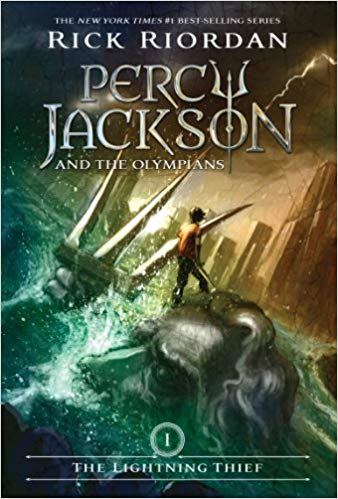
For several years now, the Percy Jackson series has been all the rage. Rick Riordan has almost single-handedly kindled an obsession with Greek mythology. (So much so that during our study of major world religions, more than one student has shared with me, quite in earnest, that his or her personal religion is a belief in the Greek gods.)

I read The Lightning Thief, the first book in the series. I thought it was . . . okay. Riordan’s no J.K. Rowling, in my opinion, the gold standard by which all writers of young adult fiction must be measured. The book seemed overly complicated, trying too hard to shoehorn too many of the characters from Greek mythology into analogous modern-day permutations. But I suppose if it gets kids excited about reading and learning, it’s all good.

51BfYSYSfxL._SX336_BO1,204,203,200_

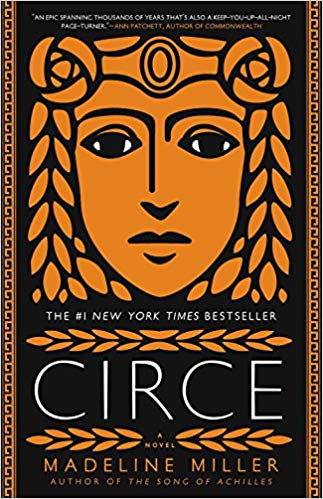
So Greek mythology was seeming a little trendy to me when I started seeing Madeline Miller’s Circe on all the book lists. (In case you, like I was, are wondering how to pronounce the title, you have options. The author explained in an interview that in ancient Greek, the name would have been said “KIR-kee,” but that she herself says “SUR-see” in an effort to keep things more relatable for her readers.) 

Even when one of my favorite authors promoted Circe on her bookstore’s blog, I still wasn’t sold. But then the librarian at school asked me if I’d read Circe yet.

“Ohhhhh.” She smiled knowingly, reverently. “You’ll love it.”

An endorsement from her is no small thing. As a media specialist, she reads a LOT. Incidentally, she also finishes every book she starts, which really staggers me because I ruthlessly abandon books if they don’t grab me with a compelling storyline or skillful writing within the first chapter or so. It’s funny though—a few times, I have started then abandoned a book, but later given it another chance based on Deanna’s recommendation. And loved it. I’ve mused to Deanna that she must be a lot more discerning than I am about books she starts, but she says no. She just feels more obligated to persist than I do, in the interest of being familiar with a wide range of authors and genres. At any rate, if Deanna loved Circe, I figured I should give it a look.

51eaZ1mO9ML._SX321_BO1,204,203,200_

The first few chapters were a jumble of Greek name-drops and mythological backstory. Titans versus Olympians; naiads and dryads and oreads. Now Circe’s at a wedding banquet; oh, look at all the Olympians—Poseidon, and Apollo, and Hephaestus. Sigh. Percy Jackson for grownups, I muttered to myself disparagingly. But Deanna had loved it. . . . So I persisted.

And found myself utterly bewitched by Circe, the nymph, the sorceress, exiled to Aiaia for defying her father, contradicting his authority, and using witchcraft to poison a fellow immortal. (Who, let’s be honest, totally had it coming.) 

But Circe’s punishment in many ways is more of a blessing. After eons of being overshadowed and derided by her more richly endowed family, the exile marks a new beginning. Circe’s truest self at last emerges. On the deserted yet peaceful island, amidst the lindens and cypresses, thyme and moly, Circe’s deep-rooted courage and resilience flourish. Through sheer hard work, she perfects her skills as a pharmakis. She takes no immortal shortcuts, and I loved her for her grit and determination in honing her witchcraft. Nature whispers its secrets to Circe, and she learns how to cast all manner of spells—though she has a particular affinity for transformation, as Odysseus’s men discover the hard way.

Edward_Burne-Jones_-_The_Wine_of_Circe_1900-1200x809
Illustration of Circe preparing a magical draught, from The Outline of Literature by John Drinkwater (Newnes, c 1900). Public domain.

Exile is a terrible fate for an immortal, however, and self-contained though she is, Circe struggles with her share of loneliness. She bears the burdens of her fate as best she can. And never one to shy away from risk or fear, in the end the very qualities that gained full expression because of her exile—her bravery and sense of self-worth—are what bring it to an end.

Madeline Miller breathes new life into legendary heroes and villians of Greek mythology, from Prometheus and Daedalus to Medea and the Minotaur. And Circe herself, who was at most a footnote in my subconscious, a shadowy memory from a long-ago reading of The Odyssey, assumes her position as a shining example of what is possible when we embrace our true selves.

41fKTpMUvnL._SX329_BO1,204,203,200_

Once I had gotten on board with the Greek revival, I was all ears when Deanna recommended Lovely War by Julie Berry. It’s set primarily during World War I and weaves together the stories of four young people whose lives are shaped and changed by the war in various ways. But in addition, Berry overlays her telling of their experiences with a conversation among the Greek gods Aphrodite, Ares, Hephaestus, Apollo, and Hades. Actually, it is more like a series of reminiscences. But technically, it is a trial. 

Berry mashes up the mythological with the modern-day: Hephaestus has caught his wife, Aphrodite, and her lover, Ares, in the act and ensnared them in a golden net. Faced with a humiliating and very public trial on Mount Olympus, Aphrodite proposes that they settle the matter privately, amongst themselves, in the cozy hotel room where they were caught. Aphrodite spins a spellbinding defense: She tells a love story, the story of our four young people, and calls upon the testimony of various witnesses—Apollo, Hades, even Ares—to round out the details of certain episodes. In this story, the gods are active participants in the human drama, nudging would-be lovers, inspiring soldiers, easing the shock of arrival in the afterlife. The gods’ strengths and weaknesses, desires and jealousies are exposed throughout the trial as well as in the ways they influence the lives of the mortals. 

hephaestus-4_orig
Painting of the ensnared lovers by Alexandre Charles Guillemot (French, 1786-1831), Indianapolis Museum of Art

I came to love each of the gods, for their kindnesses and for their imperfections. And I loved the four young protagonists, so idealistic, brave, and loyal.

I also really enjoy novels that alternate narrators, expressing the action from multiple perspectives, as this one does. It is, quite simply, an imaginative, evocative, and beautiful work of historical (and mythological) fiction. 

By the way: Do not let yourself be put off if you notice that the novel is marketed to teens/young adults. There seems to be a growing crossover genre spanning teens-adults, and Lovely War must fall in that range on the spectrum. I didn’t discover that until after I’d read it, but at no point did it strike me as a “teen read.” Not that there’s anything wrong with that. I’ve read lots of young adult literature! It’s just nice to know what you’re signing up for.

So . . .

Will there be a happy ending for the four young lovers, adrift in the carnage and chaos of world wars?

Does Circe embrace mortality or eternity?

There’s only one way to find out.


Read

A Shout Out for Quiet

If there is one book that has changed my life—and I do not say this hyperbolically—it is Susan Cain’s Quiet

I am a quiet person.
I am soft spoken and calm.
I listen more than I talk.
I think before I speak.
I need a lot of alone time.

In other words, I am a textbook introvert. 

It’s funny, when I look at personality inventories or lists of questions to determine whether a person is an extrovert or an introvert, there is never any gray area with me. Not that it’s something I’ve ever doubted about myself—I’ve always known that I am an introvert. But it is striking to see it confirmed so unequivocally.

Yet for much of my life, I wished that I weren’t this way. 

I couldn’t tell you how many times some extrovert has made the hearty joke, “Whoa, you shouldn’t talk so much!” Or how many times a teacher noted that I needed to participate more in class. Or that I noticed that my tally of close friends always equaled one or two, while other people had entire flocks. 

What was wrong with me? Why wasn’t I more outgoing? Why would I rather stay home and read a book than go to a party? Why would I rather eat a quiet lunch at my desk than join a boisterous crowd in the cafeteria?

As an introvert, I grew up feeling less-than. Abnormal. For years, I felt like there was something wrong with me. Through high school, through college, even into adulthood, I always wished I could be different.

But don’t go feeling sorry for me! Because when I read Susan Cain’s book Quiet: The Power of Introverts in a World That Can’t Stop Talking, it changed everything.

img_20190707_165344_1

The first, and most powerful, effect was that I realized: I’m not alone. She knew EXACTLY how I felt. She, and the people whose stories she shared, knew firsthand the bias against quiet people. The shame we felt as children being admonished to talk more and  “come out of our shells.” The guilt we feel as adults declining party invitations in favor of solitude. I felt validated and understood for perhaps the first time ever. 

Here’s what I learned.

One-third to one-half of the population are introverts. Half! We’re not some freakish anomaly—there’s a lot of us!

Introverts are often misunderstood and misrepresented. People hear the word “introvert” and picture an awkward, tongue-tied bookworm, pale and atrophied from spending too many hours alone in a laboratory. 

But introverts can be social. Introverts can be public speakers. In fact, many introverts are probably people you wouldn’t expect.

People often assume that the main distinction is that introverts are shy and extroverts are outgoing. And many introverts are shy and experience significant social anxiety, but that isn’t the most important difference. In large part, it comes down to a difference in how their neurological systems respond to stimuli. 

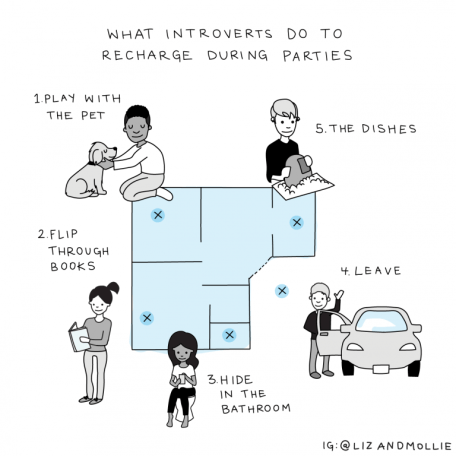
Introverts have sensitive neurological systems, a trait they often display from infancy. Their systems are, as Susan Cain explains, “high reactive,” easily overstimulated by too much noise, too many people, too much visual distraction. To recover, they must then “recharge their batteries” or restore their energy by spending time alone. Extroverts, on the other hand, have “low reactive” systems and need lots of stimulation in order to feel engaged and energized. So while introverts find themselves drained after a social event, even one at which they have enjoyed themselves, extroverts find the same experience invigorating. One of my secret coping mechanisms (in fact used by many fellow introverts) is to escape to a bathroom for a few minutes of quiet and solitude when I’m feeling overstimulated at a party or event. 

QA1-1-768x768
© Liz Fosslien and Mollie West

It might seem counterintuitive that an introvert like myself would choose to be a middle school teacher. Talk about chaos and overstimulation! Spending all day either talking or being talked at definitely depletes me. I usually drive home from school with the radio off, just enjoying the silence in my car, and my understanding husband knows that I need about an hour of quiet time before I’m fit for additional socialization at home. Yet my work is also incredibly rewarding, and many of my coworkers (well, probably one-third to one-half) are introverts as well. Introvert does not equal awkward/antisocial/loner. But we’re probably going to pass on the Friday after-school Happy Hour in favor a quiet, restorative evening at home.

In fact, “restorative niches” are one component of a theory Cain learned about from Professor Brian Little, a former Harvard University psychology lecturer. This engaging, theatrical, and—surprise!—introverted professor developed the Free Trait Theory to explain personality characteristics. According to Professor Little, we are all born with certain fixed personality traits, like introversion, but can and do choose to access other “free traits,” like extroversion, when we want to. A free trait is not our biological default, but we can employ it when a situation demands, or when we are adequately motivated by our beliefs and passions. The Free Trait Theory explains how an introvert like Susan Cain can deliver speeches to crowds of people in boardrooms and auditoriums all over the world. She is passionate about her work, and the drive to share her passion with others trumps her instinct to stay hunkered down in her cozy office at home. (The Free Trait Theory also explains why you can’t always spot an introvert.) So introverts can enjoy success and fulfillment in traditionally extroverted settings (and vice versa), however . . . they’re going to need some restorative niches. Professor Little describes a restorative niche as the place we go to return to our true selves. An introvert can free-trait an extroverted persona for only so long. She needs a place, either an actual physical space or a quiet place in her mind, where she can escape to be alone and recharge her battery. Without restorative niches, a person is headed for burnout.

In our society, it can be difficult to be introverted. As we evolved from a rural, agrarian society into a more urban, industrial one during the twentieth century, our culture shifted toward a celebration of what Cain calls the Extrovert Ideal. The person who was bold, outspoken, and dramatic, quick to think and speak, was the one who stood out in a crowded city and could “sell” his or her talents in competitive marketplaces. Still today, in our schools, businesses, and popular culture, extroverts tend to command the most attention. Extroversion is still the “ideal” by which we are measured and to which we are encouraged, explicitly or not, to aspire. 

But with Susan Cain’s quiet voice shining a light on the hidden power of introverts, things are starting to change. In Quiet, she offers research, personal stories, and advice for helping introverts find their path. She teaches us how to celebrate and cultivate our strengths and how to navigate a world that “can’t stop talking.” After all those years of wishing I were different, I now embrace my introversion.

We are gaining a deeper understanding of ourselves and the people around us. This is important for parents and children, teachers and students, spouses, and friends. We are learning to appreciate our differences and recognize that the world needs the yin and yang of extroverts and introverts. 


References and Resources

Quiet: The Power of Introverts in a World That Can’t Stop Talking by Susan Cain

Susan Cain TED Talk: The Power of Introverts

Quiet Revolution: Susan Cain’s Newsletter

Quiet: The Power of Introverts with Susan Cain (Podcast)